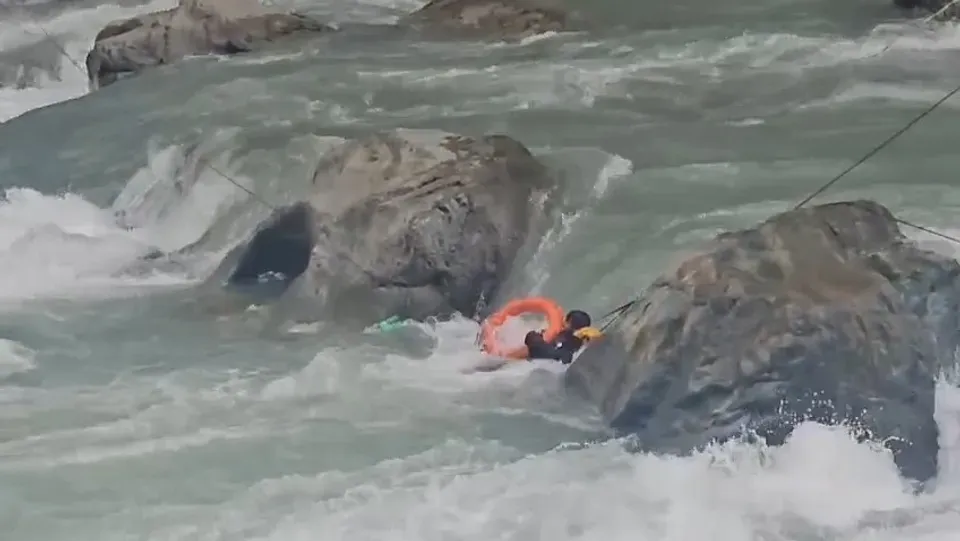
A series of drowning incidents across the valley has shattered multiple families. The recent tragedies read like a litany of heartbreaks. In Pahalgam, a family outing turned into a fatal disaster when a young boy attempting to click photographs, slipped into the roaring currents of River Lidder. Driven by pure instinct his father jumped into the treacherous waters to rescue him While the son was pulled out alive, the father was swept away by the strong current. On the very same day at Surrinder in Bandipora district another father-son duo swept into a water body, though the father was rescued but his son was lost to depths. In Tangmarg a three year old boy fell into the water body, and was brought dead to the Sub District Hospital Tangmarg, while in Srinagar a teenage boy met a similar, silent end in Nigeen Lake.
Drowning has quietly become one of the leading causes of accidental deaths in Kashmir. According to the official records from the State Disaster Response Force(SDRF) in the previous year 2025 alone,65 drowning deaths were reported with only 20 individuals rescued alive and several others missing.
Drowning is a swift, deceptively silent killer. It happens quietly, often within minutes of a lapse in vigilance. The risk factors and causes vary sharply across different age groups and circumstances
For infants, depth is irrelevant. A baby can drown in just a few inches of water in less than five minutes,happening the moment an adult’s attention shifts.
Young children frequently drown due to a lack of physical barriers. Unfenced swimming pools, uncovered residential wells, open ponds, and unprotected local canals give curious toddlers unexpected and fatal access to water.
Adults are most vulnerable in natural water bodies like lakes, rivers, and streams.Tragedies occur when individuals underestimate the violent nature of open currents or drastically overestimate their own swimming capabilities.
Naturally, weak or inexperienced swimmers face the highest risk. Additionally, individuals with specific medical conditions, such as epilepsy or autism, have a statistically higher vulnerability to sudden water distress.
A culture of casualness often precedes a tragedy. Engaging in risky behaviors, such as bathing in restricted zones, playing near fast-flowing rivers, or being distracted while clicking photographs and selfies instantly turns recreation into ruin.
A devastating majority of boating and deep-water drowning deaths involve individuals who fail to wear a certified life jacket or personal flotation device.
Beyond personal choices, natural disasters like flash floods and overflowing rivers present inescapable environmental drowning hazards, tragedies that are frequently magnified by a collective failure to heed early warnings and respect nature’s boundaries.
Preventing the tragedies of drowning requires a multi-tiered approach built on strict accountability, education, and preparedness.
First and foremost, adult supervision must be absolute. Because a brief lapse in attention is the leading cause of accidental child drowning, parents must ensure young children are never granted unsupervised access to dangerous waters, keeping them within arm’s reach near any water source.
Installing secure fencing around pools and covering open water bodies like residential wells or ponds is crucial. Restricting unexpected access in this manner is the single most effective way to protect curious toddlers.
Safety begins at home. Simple habits like keeping bathroom doors shut and toilet lids closed can eliminate overlooked indoor drowning hazards for infants.
Enrolling children in formal water safety training and swimming lessons drastically reduces drowning risks. Knowing how to swim not only builds personal resilience but also enhances the chances of a safe and successful rescue.
When boating or swimming in open waters, wearing a properly fitted, coast guard-approved life jacket is non-negotiable. We must stop relying on inflatables or water wings, which offer a false sense of security and cannot substitute for certified personal flotation devices.
During environmental crises like flash floods, public complacency is fatal. Communities must strictly respect and adhere to the real-time warnings, advisories, and evacuation alerts issued by local authorities.
Knowing how to administer Cardiopulmonary Resuscitation (CPR) is a critical, lifesaving skill. Crucially, when rescuing a drowning victim, the protocol differs from standard cardiac events bystanders must prioritize immediate rescue breathing (mouth-to-mouth resuscitation) before beginning standard chest compressions, as oxygen deprivation is the primary threat to a drowning victim’s life.
Drowning is fast, silent and scary, but it is also entirely preventable.Whether you are parent safeguarding your children,a swimmer or someone who just enjoys being near the water,it is important to stay alert and be prepared.Simple steps like watching kids closely, wearing certified life jackets and having basic knowledge of CPR can save the lives.There is no doubt that drowning is a serious threat but the more we know the more confident we can be in protecting ourselves and others.
G Q Kamran Educator at Govt Model Hr Sec School Zoohama.