The Ghost of Jantar Mantar-Delhi: Young Students named themselves as cockroach, the 2026 NEET Crisis, and the Architecture of State Silence
By- Yashfeen Sultan – Delhi I NCR -
The summer of 2026 began not with the promise of a new academic year, but with a blood sacrifice at the altar of systemic incompetence. On May 3, millions of students sat for the NEET exam; by May 5, the integrity of that future was compromised by a massive paper leak. When re-evaluation results were finally declared on July 16, the human cost was no longer a statistic of scores, but of souls: 21 students had committed suicide, and thousands more stood amidst the wreckage of evaluation errors that decimated their dreams.
It was into this moral vacuum that Sonam Wangchuk—innovator, Nobel Prize winner, and the conscience of Ladakh—stepped. On June 25, he issued a visceral warning to a silent government: take accountability for the youth and for Ladakh, or witness a hunger strike to the end. On June 28, he took his place at Jantar Mantar. For twenty days, a man who built schools and glaciers sat on the pavement, starving himself for a generation, while the state and the media conspired to pretend he did not exist. Why was a world-renowned scientist, surrounded by grieving students, met with such overwhelming brutality and orchestrated silence?
The Great Media Divorce: How "National ADHD" Feeds the Blackout
The protests of July 2026 exposed a permanent rupture in the Indian information landscape—the Great Media Divorce. While the nation’s youth were bleeding on the streets of the capital, national media outlets largely refused to acknowledge the scale of the crisis. There is a sharp, bitter irony here: the very social media platforms that older generations long dismissed as "distractions" became the only repositories of truth.
This blackout is fueled by what can only be described as "National ADHD"—a curated short-sightedness where the gravity of a hunger strike is replaced by the triviality of gossip. Instead of addressing the 21 student deaths, the public discourse was polluted with absurd allegations that Wangchuk was "anti-national" or hiding chicken soup in his flask. This is the goal of the state-media apparatus: to ensure that serious systemic failure is drowned out by the noise of the ridiculous. When traditional newsrooms abdicate their duty to witness, the power dynamic of information shifts; the truth no longer asks for permission from an editor—it lives on the smartphone of a terrified student.
The "Ghost" of Jantar Mantar and the July 18 Abduction
The vacuum created by this media silence allowed the state to act with a cowardice that is usually reserved for the shadows. On Saturday, July 18, at 7:40 am—a time chosen because the supporters who could have protected him were still asleep—the Delhi Police forcibly removed a starving, 59-year-old Wangchuk and "abducted" him to Safdurjang Hospital.
This move did not stifle the movement; it sanctified it. Wangchuk had already anticipated this betrayal. In a haunting video message recorded on July 17, he laid out a spiritual commitment to the youth:
"I will stay alive by any means until July 20... And if our march doesn't succeed on July 20, then I'll come back as a ghost."
This was not mere rhetoric. It was a promise that the spirit of the protest would transcend his physical presence. By the time the government-organized "abduction" took place, the "Ghost" of Wangchuk had already moved into the hearts of the students, setting the stage for the most harrowing day in the history of Jantar Mantar.
The Rise of the Unidentified Officer: A Signature of State Terror
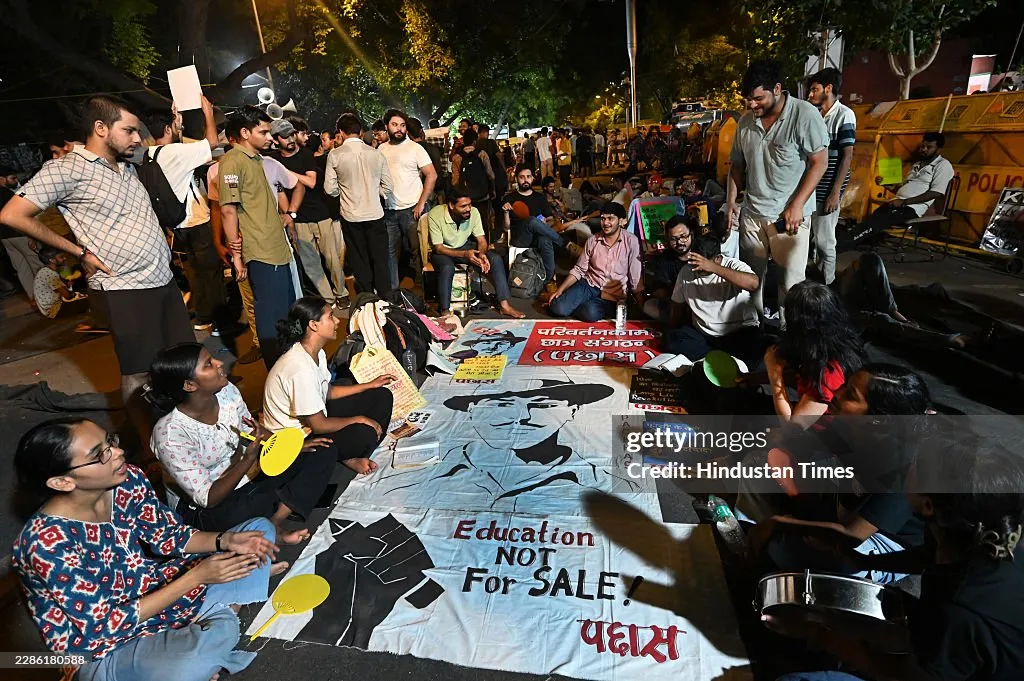
On July 20, the "Chalo Sansad" march—organized by the CJP—was met with a response that looked less like law enforcement and more like state-sponsored terror. The crackdown was defined by a calculated lack of transparency. Men in uniform appeared without name tags; others in civilian attire roamed the crowd, wielding batons with a ferocity that suggested personal immunity.
The details are disturbing: protesters reported that these "unidentified" officers had attached nails to their batons to maximize physical trauma. Despite the thousands of women and children present, there was a blatant absence of female officers—a legal requirement for any detention of women, yet a protocol ignored here just as it was during the 2019 Jamia Millia protests and the 2022 Bihar liquor raids.
Perhaps most chilling was the gaslighting that followed. While the police officially refused to admit to the injuries—which included a 12-year-old girl who suffered a broken head—they did not deny the lathi charge itself. They admitted to the violence, but attempted to erase the victims. To justify the carnage, authorities displayed broken car windows and stones as "proof" of student violence, even as thousands of phone cameras documented a peaceful assembly being systematically crushed.
A Surreal Demographic of Resistance
The crowd that the CJP led to Jantar Mantar on July 20 was a heartbreaking cross-section of a broken promise. This was not a gathering of seasoned agitators, but a surreal assembly of the desperate:
The Hidden Face: Students who covered their faces not from the police, but from their own pro-government families, fearing that the political divide at the dinner table would lead to their own exile.
The Family Outing: Parents who treated the front lines like a Sunday excursion, bringing their children along because they realized that if they didn't fight today, there would be no future to secure tomorrow.
The Newborn Protest: Infants held aloft by their parents, carrying slogans that requested—with a tragic innocence—that their futures be saved before they had even begun.
The political reaction was swift but helpless. Priyanka Gandhi called the situation "ridiculous," noting the sheer absurdity of a state that finds it necessary to beat children. One student, standing amidst the tear gas, summarized the national shame: “We’re students, not terrorists. If a rapist had been treated the way we are being treated, this country would be a better place.”
The Weight of Witnessing
The events of July 2026 have left behind more than just physical scars; they have left a residue of profound guilt. For many of us, the realization of what occurred at Jantar Mantar came far too late. We were immersed in our own lives, our own studies, or our own digital bubbles, unaware that the air around us was thick with the scent of tear gas and the cries of the injured.
The CJP reported 40 to 50 adults severely injured, alongside that 12-year-old girl whose childhood ended under the strike of a baton. There is a specific kind of sorrow that comes with knowing your brothers and sisters were bleeding for a future that you also intend to inhabit.
The crackdown at Jantar Mantar forces a final, uncomfortable question upon the Indian citizen: In a system that uses "National ADHD," media blackouts, and unidentified force to mask its failures, what does it take to move from being a witness to being a participant? If we wait until the "ghosts" are the only ones left to speak, we will have already lost the country. The future depends on who is willing to stand beside the fighters while they are still made of flesh and bone.
Mob No- 8800378111
Abou the author -Yashfeen Sultan is a student, writer, and aspiring public policy enthusiast. She has written and published fiction and non-fiction stories for children and young readers. Passionate about education, law, public policy, and human development, she enjoys exploring issues that shape the lives of students and society through her writing.