Rs 5,070 cr for PMSSY scheme for floating solar projects
*Rs 84,084 cr for National Offshore Exploration
NEW DELHI, July 31:
The Government on Friday extended the PM-KISAN scheme for the next five years till 2030-31 with a total outlay of over Rs 3.15 lakh crore, a decision aimed at providing financial support to farmers.
Under the Pradhan Mantri Kisan Samman Nidhi (PM-KISAN) scheme, launched in February 2019, eligible landholding farmer families get financial assistance of Rs 6,000 per year. The amount is transferred directly into their bank accounts in three equal instalments. Nearly 4.5 lakh crore have been disbursed so far under this scheme.
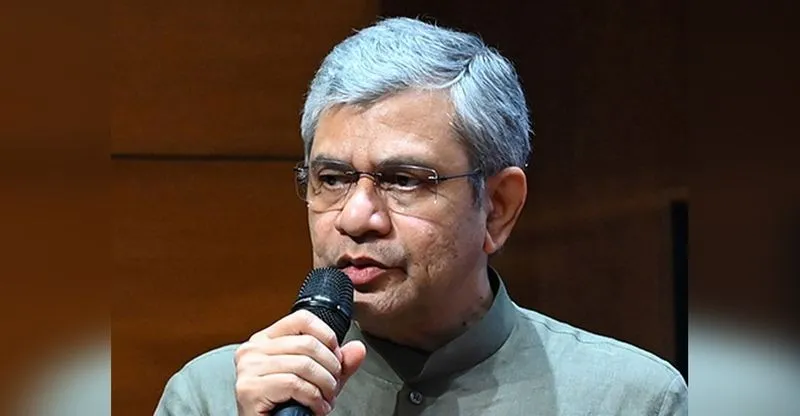
The Union Cabinet, chaired by Prime Minister Narendra Modi, approved continuation of the PM-KISAN scheme from 2026-27 to 2030-31, I&B Minister Ashwini Vaishnaw told reporters here.
A total financial outlay of Rs 3,15,614 crore has been approved for the Scheme during this period, he added.
"The approval reiterates the Government's commitment that the prosperity of farmers forms the foundation of the nation's prosperity," the Government said in a statement.
The extension of the scheme will enhance farmers' capacity to invest in agriculture, improve productivity, help reduce agricultural risks and strengthen the rural economy, it added.
Through this scheme, timely and transparent income support is being provided to eligible farmer families through the Direct Benefit Transfer (DBT) system.
Talking about the successful implementation of this programme, the Government said it has so far disbursed more than Rs 4.47 lakh crore directly into farmers' bank accounts through 23 instalments under the scheme.
Under the 23rd instalment, more than 9.49 crore farmers benefited, with over Rs 18,984 crore released.
"Women farmers have received more than Rs 1.06 lakh crore under PM-KISAN, and nearly one out of every four beneficiaries is a woman farmer," the statement said.
The Government also approved Pradhan Mantri Surya Sarovar Yojana (PM-SSY) for development of floating solar photovoltaic projects with energy storage systems with a total outlay of Rs 5,070 crore, an official statement said.
The scheme envisages the development of 5,000 MW of Floating Solar Photovoltaic projects with co-located Energy Storage Systems having a minimum storage capacity of two hours, i.e., 10,000 MWh, the statement said.
The projects will be sanctioned during FY 2026-27 to FY 2030-31, with disbursement of financial support continuing up to FY 2032-33.
"The Union Cabinet today approved the 'Pradhan Mantri Surya Sarovar Yojana (PM-SSY)', a Scheme for the development of Floating Solar Photovoltaic (FSPV) Projects with Energy Storage Systems (ESS) with a total outlay of Rs.5,070 crore," the official statement said.
The approval follows the recent assessment undertaken by the National Institute of Solar Energy (NISE), which has estimated a floating solar potential of approximately 102.18 GWp across reservoirs and other suitable inland water bodies in the country.
Under the scheme, Central Financial Assistance (CFA) of Rs 1 crore per MW will be provided for eligible Floating Solar Photovoltaic projects after successful commissioning.
In addition, CFA of up to Rs 50 lakh per project will be available for undertaking feasibility studies, including bathymetry and hydrography assessments, environmental studies, and other preparatory activities required for de-risking the project development.
States and Union Territories will benefit through this scheme. The scheme would enhance the floating Solar PV capacity in the country by 5,000 MW, which is presently around 700 MW only.
Meanwhile, the Union Cabinet approved the Rs 84,084-crore "Samudra Manthan" National Offshore Exploration Scheme to partly fund the high cost of finding oil and gas in deepwater areas, drilling exploratory wells and building common infrastructure to bring new discoveries into production.
Under the scheme, the Government will provide support of up to Rs 650 crore for each well drilled in deepsea and ultra-deepsea areas, officials said, as part of efforts to boost domestic oil and gas output and reduce reliance on imports.
More than half of the scheme's total outlay, or Rs 43,200 crore, will be allocated over five years through 2031 to support deepsea drilling, an activity involving high costs and significant geological risks as not every exploratory well results in a commercial discovery.
Another Rs 10,000 crore has been earmarked to partially fund common infrastructure needed to bring discovered oil and gas reserves into production. The scheme also provides Rs 28,534 crore for offshore data acquisition and Rs 2,000 crore for developing oil and gas manufacturing and services zones.
Drilling in ultra-deepwater areas, where water depths exceed 1,500 metres, can cost between USD 100 million (about Rs 950 crore) and USD 250 million (around Rs 2,400 crore) per well, with no certainty that the investment will result in a discovery or contribute to higher domestic production.
The Government expects the scheme to accelerate exploration in offshore basins, attract investment and help unlock India's offshore hydrocarbon potential, according to an official statement.
India's reliance on imported crude oil, the key raw material used to produce fuels such as petrol and diesel, has increased over the past decade from 77 per cent to 88 per cent. The country also imports around half of its natural gas requirements, which is used in sectors including fertiliser production, power generation, compressed natural gas (CNG) for vehicles and piped cooking gas supplies to households.
The recent conflict in West Asia, which disrupted energy supplies, highlighted the vulnerability of import-dependent economies and renewed focus on strengthening domestic production capacity.
"The Union Cabinet has approved 'Samudra Manthan' - the National Offshore Exploration Scheme, a Central Sector Scheme of the Ministry of Petroleum & Natural Gas with an approved outlay of Rs 84,084 crore for implementation up to FY 2030-31," the statement said.
The scheme aims to step up exploration in deepwater and ultra-deepwater areas through large-scale seismic surveys, exploratory drilling, scientific drilling in frontier basins and the development of common offshore production and evacuation infrastructure.
The programme also provides for the creation of an integrated oil and gas manufacturing and services zone, along with investments in digital programme management, technology adoption, capacity building, stakeholder engagement and international collaboration to support offshore exploration and production, it said.
India's oil and gas output has been under pressure due to the natural decline of ageing fields, while limited investment in frontier basins with potential for fresh discoveries has constrained production growth. Against this backdrop, the Government has allocated funds for a five-year programme through FY2030-31 to accelerate offshore exploration and develop supporting infrastructure.
The scheme is aimed at supporting seismic surveys, deepwater and ultra-deepwater drilling, exploration in frontier basins and the creation of common offshore production and evacuation facilities.
The cabinet also approved an expanded Khelo India Scheme and enhanced the budget for Assistance to the National Sports Federations (ANSFs) with a combined outlay of Rs 36,441 crore covering the next five years.
The Government has allocated Rs 29,054 crore to the Khelo India Scheme that aims to build a pool of talented athletes at the grassroots level as India bids to become a global sporting hub by hosting the 2030 Commonwealth Games and bidding for the 2036 Olympics.
The assistance to NSFs has been pegged at Rs 7387 crore over the next five years. The existing budgetary allocation for the Assistance to National Sports Federations (NSFs) for the year 2026-27 stood at Rs 425 crore.
"The approved outlay is nearly eight times that of the previous Khelo India Scheme, reflecting the Government's commitment to making sports a cornerstone of youth development, nation-building and India's emergence as a global sporting powerhouse," read a statement from the Government.
Khelo India was launched in 2017 and has been receiving the lion's share of allocation from the union sports budget annually. The scheme currently has close to 2800 athletes on its roster and they are provided Government funding for nutritional and training needs through scholarships.
A nationwide network of Khelo India Centres of Excellence (KICoEs), Khelo India Accredited Academies (KIAAs), Khelo India Centres (KICs) and Youth Sports Companies (YSCs) of the Armed Forces is currently in operation to train athletes.
To strengthen the school sports ecosystem, the Government has introduced two new initiatives -- Khelo India Feeder Schools (KIFS) and Khelo India Utkrishta Vidyalayas (KIUV) -- which will "integrate sports with mainstream education and enable early identification and systematic nurturing of talented children."
The Assistance to National Sports Federations (ANSF) Scheme for the period 2026-31 will financially support athletes' coaching, modern equipment, international exposure, engagement of foreign experts and participation in major international competitions. The scheme is designed help NSFs conduct camps and tournaments.
"It will also support sports cooperation with countries of the Global South and promote India's indigenous sports internationally," the Government stated. (PTI)