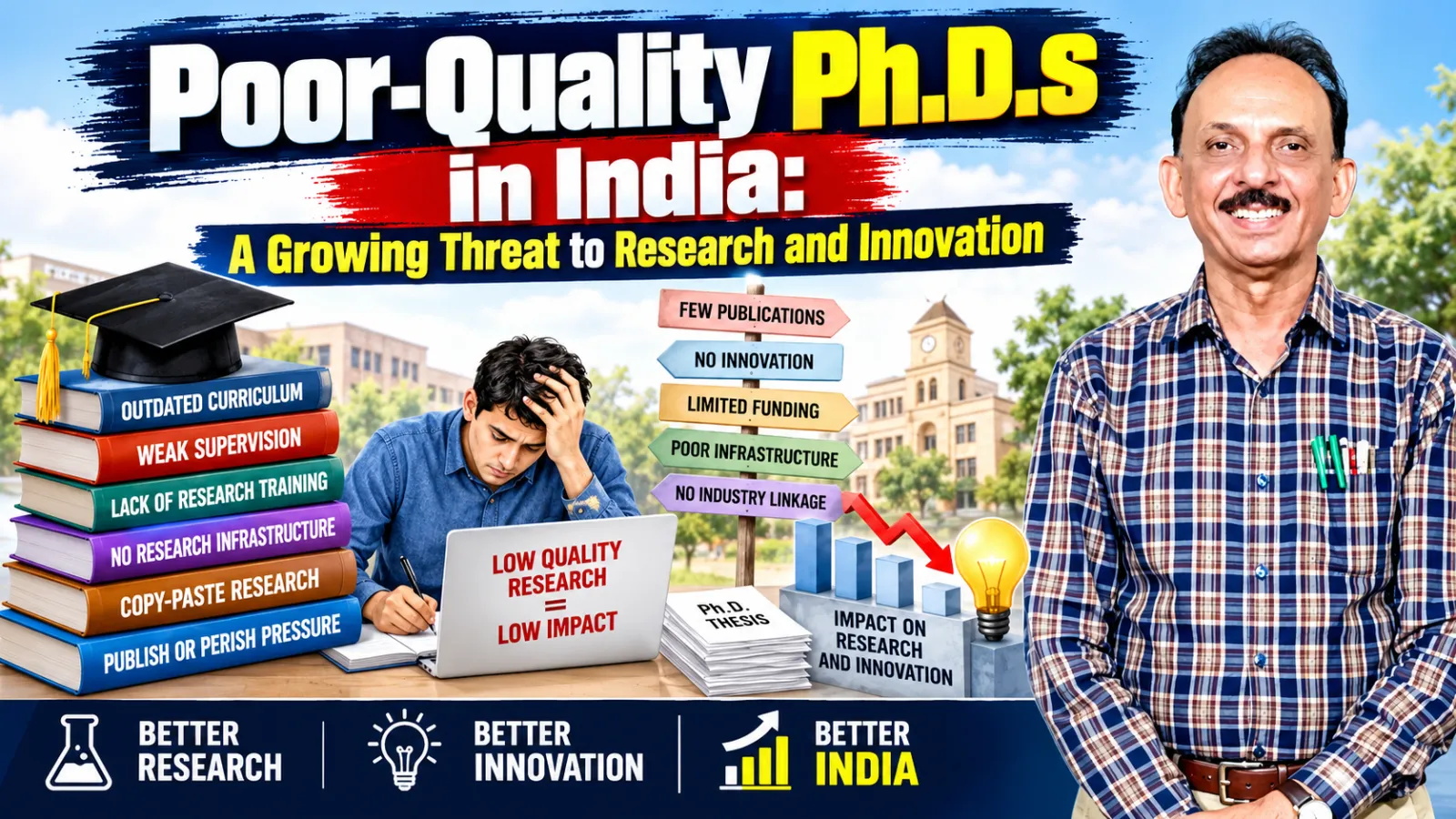
Beyond knowledge: Human skills that define an effective PhD Supervisor
[Empathy, ethical leadership, patience and intellectual independence must become the foundations of doctoral supervision]
Prof. R.K. Uppal
A PhD supervisor may possess impressive academic qualifications, hundreds of research publications and decades of experience, yet still fail to develop a competent researcher. The reason is simple: academic expertise does not automatically make someone an effective mentor. Doctoral supervision is not merely the process of checking research chapters, approving progress reports and guiding a scholar towards a degree. It is a demanding human responsibility that shapes intellectual confidence, professional ethics and the future of research.
Academic Qualifications Are Not Enough
Universities often emphasize research publications, academic experience, subject knowledge and regulatory eligibility when assessing supervisors. These credentials are essential, but they cannot guarantee effective supervision. A highly published academic may be an excellent researcher but an ineffective mentor. Conversely, a supervisor who combines research expertise with patience, emotional intelligence and sound communication can transform an ordinary research experience into an exceptional intellectual journey.
The fundamental question is not simply whether a supervisor knows the subject. It is whether the supervisor can help another person question established assumptions, develop original ideas and produce credible knowledge. A supervisor’s real achievement is not the number of theses completed but the number of independent researchers developed.
Empathy: Understanding the Scholar behind the Thesis
Every PhD scholar has different intellectual abilities, financial circumstances, professional commitments and personal responsibilities. Some pursue research full-time, while others balance doctoral studies with employment, teaching and family obligations. An effective supervisor understands these differences without compromising academic standards.
Empathy does not mean accepting poor performance or lowering research expectations. It means listening carefully; identifying difficulties and helping scholars find practical solutions. A scholar facing methodological problems needs guidance, not humiliation. A researcher experiencing an unsuccessful investigation needs constructive advice, not discouragement.
When scholars fear their supervisors, they may conceal mistakes, avoid difficult questions and become reluctant to challenge established ideas. Such an environment discourages originality. Research flourishes when scholars feel secure enough to acknowledge uncertainty, question assumptions and learn from failure.
Communication: The Foundation of Effective Supervision
Poor communication can waste months of research effort. Unclear instructions, delayed feedback, irregular meetings and contradictory advice create confusion and frustration. Supervisors must establish realistic milestones, explain expectations and provide timely, specific feedback.
Patience without Compromising Excellence
Research rarely follows a predictable path. Data collection fails, hypotheses prove incorrect, and literature reviews reveal new questions and methodologies require revision. These difficulties are inherent in original investigation.
An effective supervisor distinguishes genuine research challenges from persistent negligence. Patience must be balanced with discipline, accountability and deadlines. Excessive pressure can suppress creativity, while excessive leniency can encourage complacency.
The objective is to provide sufficient guidance initially and gradually encourage independent decision-making. A scholar who depends permanently on the supervisor has not achieved the intellectual maturity expected of doctoral education.
Ethics, Fairness and Emotional Intelligence
Supervisors exercise considerable influence over scholars’ academic progress, publications and professional opportunities. This authority carries serious ethical responsibilities. Supervisors must discourage plagiarism, data manipulation, fabricated findings and inappropriate authorship practices. They must acknowledge scholarly contributions, respect confidentiality and establish transparent expectations.
They should never treat doctoral scholars merely as assistants for unrelated administrative assignments or use their research contributions without appropriate recognition. Equally, scholars must respect legitimate academic guidance and fulfill their research responsibilities.
Emotional intelligence is equally important. Disagreements over research methods, publication decisions or interpretations of findings are inevitable. Supervisors must manage these differences through evidence, dialogue and mutual respect rather than intimidation or personal criticism.
Fairness requires consistent standards for all scholars, regardless of personal relationships or institutional influence. A supervisor’s authority should strengthen academic integrity, not create academic dependence.
Encouraging Originality in the Age of Artificial Intelligence
The growing availability of artificial intelligence has introduced new opportunities and challenges for doctoral research. AI tools can assist with literature discovery, language improvement, data analysis and research organization. However, they cannot replace independent judgment, critical thinking or responsibility for scholarly claims.
Supervisors must teach scholars to evaluate AI-generated information, verify references, protect research data and disclose tool usage where required by applicable institutional policies. Blind dependence on technology can produce polished writing without meaningful intellectual contribution.
The supervisor’s responsibility is to develop researchers who can ask important questions, assess evidence and defend their conclusions. Originality emerges from disciplined curiosity, not merely from sophisticated software or fluent academic language.
Universities Must Evaluate Supervisors Differently
Universities should move beyond measuring supervisory performance primarily through enrolment numbers, completion rates and publication counts. They should also assess the quality of mentoring, regularity of meetings, timeliness of feedback, ethical conduct and scholars’ development as independent researchers.
Confidential scholar feedback, periodic supervisory training and accessible grievance mechanisms can help identify weaknesses before they become serious problems. Institutions must also ensure that supervisors have sufficient time and manageable workloads to guide scholars effectively.
Supervisory appointments should therefore consider interpersonal competence alongside academic qualifications. Research methodology and subject expertise are indispensable, but communication, empathy and ethical judgment deserve systematic attention.
Conclusion: From Degree Production to Research Excellence
India does not need doctoral supervisors who merely help scholars obtain degrees. It needs mentors who cultivate curiosity, integrity, intellectual courage and independent thinking. A PhD should represent a genuine contribution to knowledge, not simply the completion of an academic requirement.
The relationship between supervisor and scholar must be built on trust, mutual respect, rigorous scholarship and clearly defined responsibilities. Supervisors must challenge weak arguments without attacking individuals, demand excellence without creating fear and offer support without encouraging dependence.
A good supervisor guides a scholar towards a PhD; an exceptional mentor prepares that scholar to think, question and research independently. The future of Indian doctoral education will depend not only on how many PhDs its universities produce, but also on the human quality of those entrusted with developing the next generation of researchers.