Fewer Qualified PhD Supervisors, More PhDs: Private Universities’ Research Crisis
Prof. R.K. Uppal
India’s doctoral education system faces a troubling contradiction: the number of institutions offering PhD programmes and the demand for doctoral degrees continue to expand, yet the availability of qualified, experienced and research-active supervisors remains a serious concern. In some private universities, the gap between doctoral admissions and genuine research capacity deserves urgent scrutiny. A university may have modern buildings, impressive advertisements and a growing list of doctoral scholars, but without adequate supervision, research infrastructure and academic mentorship, its PhD programme risks becoming a degree-awarding exercise rather than a centre of knowledge creation.
The Supervisor Shortage
A PhD is not an ordinary academic qualification. It demands independent thinking, methodological rigour, original contributions and sustained engagement with a research problem. A supervisor must help scholars develop research questions, select appropriate methods, analyse evidence, publish responsibly and defend their findings. Such responsibilities require time, expertise, academic integrity and active involvement in research.
However, when a university admits more doctoral scholars than its qualified faculty can effectively guide, the quality of supervision inevitably comes under pressure. Faculty members may already be burdened with teaching, administrative responsibilities, examinations, accreditation documentation and institutional assignments. Adding more research scholars without strengthening supervisory capacity can weaken both teaching and research.
The problem is not simply the number of supervisors listed on a university website. It is whether those supervisors possess the required qualifications, relevant subject expertise, active research engagement and sufficient time to mentor scholars effectively.
PhD Admissions Cannot Replace Research Capacity
Private universities have played an important role in expanding access to higher education. Many have developed credible research programmes, attracted accomplished academics and invested in laboratories, libraries and interdisciplinary research. It would be unfair to treat every private institution as part of the problem.
Nevertheless, the expansion of doctoral education creates a responsibility that cannot be discharged through admission advertisements alone. Institutions must demonstrate that their research ambitions are supported by adequate faculty, appropriate infrastructure and a credible academic environment.
A PhD programme should never be treated merely as another source of institutional revenue. Doctoral scholars pay fees, invest years of their lives and often sacrifice employment opportunities to pursue advanced research. They deserve more than registration, occasional meetings and procedural assistance. They need meaningful intellectual engagement, timely feedback; research training and guidance that helps them become independent scholars.
UGC Rules: A Necessary Safeguard
The University Grants Commission (UGC) PhD Regulations, 2022 establish eligibility requirements for research supervisors and prescribe limits on the number of scholars they may supervise simultaneously. Under these regulations, an eligible Professor may guide up to eight scholars, an Associate Professor up to six and an Assistant Professor up to four at a time. These provisions are intended to protect research standards. Yet regulations alone cannot guarantee quality. Effective implementation requires universities to maintain transparent records of supervisors, their current scholar loads, research credentials and subject specializations.
The real concern arises when institutions lack sufficient eligible faculty in particular disciplines but continue to expand admissions. Universities must not confuse the formal appointment of a supervisor with the actual availability of competent academic guidance.
The Hidden Cost for Research Scholars
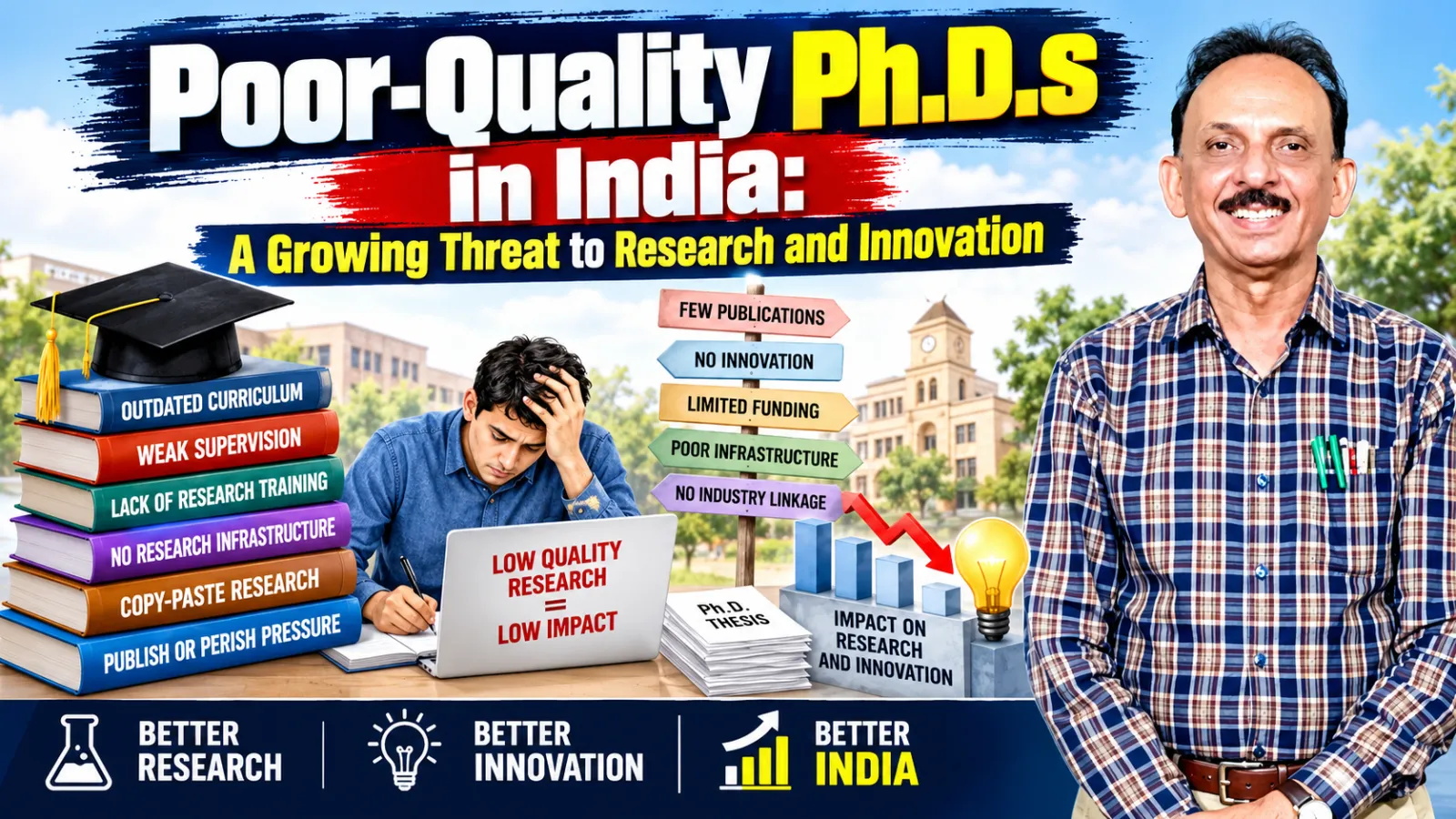
Doctoral scholars bear the consequences when supervision is inadequate. Delayed feedback can prolong research. Limited methodological guidance can weaken research design. Insufficient engagement can leave scholars struggling with data analysis, academic writing and publication. In the worst circumstances, scholars may complete their degrees without developing the independence and critical thinking expected of doctoral graduates.
The consequences extend beyond individual students. Poor-quality doctoral research weakens the credibility of academic publications, undermines confidence in university qualifications and limits the contribution of research to public policy, business, technology and society.
India does not merely need more PhD holders. It needs researchers capable of generating reliable evidence, challenging established assumptions and developing solutions to real-world problems. The distinction between producing a thesis and producing knowledge must remain central to every doctoral programme.
What Must Change?
First, universities must align PhD admissions with the actual availability of qualified supervisors. Admission targets should never override academic capacity.
Second, institutions must strengthen full-time faculty recruitment, encourage research-active academics to join doctoral programmes and develop interdisciplinary supervisory teams where appropriate.
Third, universities should publish updated information about eligible supervisors, their research interests and available supervisory capacity. Prospective scholars deserve transparent information before committing years of their lives and substantial financial resources.
Fourth, doctoral monitoring must become substantive rather than ceremonial. Research Advisory Committees should assess progress critically, identify difficulties early and ensure that scholars receive meaningful feedback. Regular meetings should produce documented academic outcomes rather than merely satisfy procedural requirements.
Fifth, universities must invest in research methodology training, statistical and analytical tools, and access to scholarly databases, ethical research practices and academic writing support. Supervisors cannot compensate indefinitely for the absence of institutional research infrastructure.
Finally, the UGC and other competent authorities should strengthen risk-based inspections, transparent compliance reporting and effective grievance mechanisms. Where deficiencies are established, corrective action must be timely and proportionate.
From PhD Expansion to Research Excellence
Private universities are an important part of India's higher education landscape. Their contribution will be judged not by the number of doctoral admissions they attract, but by the quality of researchers they nurture and the knowledge they create.
India's aspiration to become a global knowledge economy cannot be fulfilled by multiplying doctoral registrations while neglecting the people responsible for guiding research. A PhD should represent the highest level of intellectual inquiry—not merely another degree on a certificate. Until universities place supervision and research quality above enrolment numbers, India's doctoral expansion will remain vulnerable to a crisis of credibility.