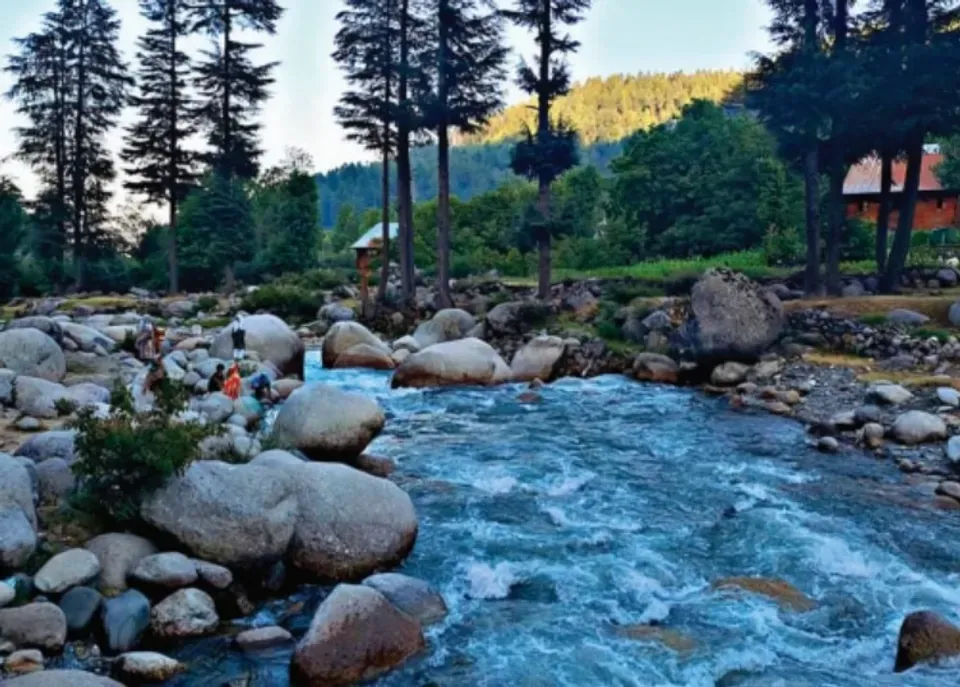
Jammu & Kashmir has always been known for its rivers, lakes, springs and streams. For generations, these natural water sources provided drinking water, supported agriculture and maintained the region’s rich biodiversity. Water was considered abundant, and very few people imagined that one day it could become a serious concern.
Today, the situation is changing. Rapid urbanization, unplanned development, encroachments, pollution and changing lifestyles have put tremendous pressure on our water resources. Many springs have dried up, small streams have turned into drains, wetlands have shrunk and several water bodies have lost their original beauty and ecological importance. Dal Lake, one of Kashmir’s most famous landmarks, has significantly reduced in size due to encroachments, siltation and pollution. The Maar Canal, once the natural outlet of Dal Lake, has also lost much of its original character. These changes remind us that natural resources cannot be taken for granted.
Climate change has made the problem even more serious. Irregular rainfall, reduced snowfall in many areas, rising temperatures and increasing demand for water are placing additional stress on already limited resources. If we fail to act now, future generations may face severe shortages of clean water.
One of the simplest, most economical and scientifically proven solutions is rainwater harvesting.
Rainwater harvesting means collecting rainwater from rooftops or other suitable surfaces, filtering it and storing it in tanks or allowing it to soak into the ground to recharge groundwater. Instead of letting rainwater flow into drains and go to waste, it can be used for gardening, irrigation, washing vehicles, cleaning courtyards, flushing toilets and many other non-drinking purposes. This helps save treated drinking water for essential household needs.
The idea is simple, but the benefits are enormous. Every rooftop can become a water collection surface. A medium-sized house can collect thousands of litres of rainwater every year, depending on the roof area and annual rainfall. The cost of installing a basic rooftop rainwater harvesting system generally ranges from about Rs. 25,000 to Rs. 70,000, depending on the storage capacity, filtration system and construction materials. Compared to the total cost of constructing a house or commercial building, this is a relatively small investment that provides long-term environmental and economic benefits.
Every day, large quantities of treated drinking water are used for watering gardens, washing vehicles, cleaning compounds and other purposes that do not require potable water. Harvested rainwater can easily replace municipal water for many of these activities, reducing pressure on public water supply systems and helping conserve precious freshwater.
Jammu & Kashmir can learn valuable lessons from other Indian states that have successfully adopted rainwater harvesting. Rajasthan has revived traditional water conservation systems such as johads, kunds and tankas, enabling many villages to improve groundwater levels and overcome water shortages. Tamil Nadu became the first Indian state to make rainwater harvesting compulsory for most buildings in 2003. Within a few years, groundwater levels and water quality improved significantly in many districts. Karnataka, especially Bengaluru, has promoted rooftop rainwater harvesting through building regulations, financial incentives and public awareness campaigns. These examples show that scientific planning, public participation and supportive government policies can make a real difference.
Jammu & Kashmir has even greater potential because it receives substantial rainfall and snowfall in many areas. By promoting rainwater harvesting in homes, hotels, schools, colleges, hospitals, government offices and commercial buildings, the Union Territory can conserve millions of litres of water every year while reducing dependence on groundwater and municipal supplies.
The Government of Jammu & Kashmir has already taken important steps to promote rooftop solar power systems. A similar approach can now be adopted for water conservation. The Government may consider launching a Rainwater Harvesting Mission to encourage the installation of scientifically designed rainwater harvesting systems across the Union Territory. Financial assistance through subsidies of 30 to 50 percent or low-interest loans could encourage households and institutions to adopt this technology. Building regulations for new constructions may also gradually include rainwater harvesting as an essential feature.
The success of such a mission would require coordinated efforts by several government departments. The Housing & Urban Development Department can take responsibility for urban areas, while the Rural Development Department can promote the programme in villages. The Department of Science & Technology can provide scientific guidance, promote innovation and create public awareness. The Jal Shakti Department and the Water Mission Organisation can oversee planning, implementation and integration with existing water conservation programmes. Local bodies, Panchayati Raj Institutions, educational institutions and civil society organisations can further strengthen the programme through awareness campaigns and community participation.
Public awareness will be the key to success. Many people are still unaware that thousands of litres of rainwater falling on their rooftops every year simply go to waste. Schools, colleges, universities, engineering institutions and scientific organisations should organise demonstrations, workshops and awareness programmes to educate citizens about the importance of water conservation and the practical methods of implementing rainwater harvesting.
Such a mission can also generate significant employment opportunities. The design, installation, maintenance and inspection of rainwater harvesting systems can create a new green service industry for trained local entrepreneurs. Jammu & Kashmir has nearly 20 lakh households. Even if an average profit of Rs. 10,000 is earned from installing one system in each household, the total business potential would be around Rs. 2,000 crore, apart from future income from maintenance, repairs and upgrades. This can create thousands of jobs while contributing to sustainable economic development.
Rainwater harvesting is not merely an engineering solution; it is an example of scientific temper in action. Scientific temper means using observation, evidence and rational thinking to solve everyday problems. Conserving water, protecting wetlands, preventing pollution, planting trees and adopting simple technologies like rooftop solar systems and rainwater harvesting demonstrate how science can directly improve people’s lives.
Jammu & Kashmir is blessed with exceptional natural beauty and valuable water resources. Protecting these resources is a shared responsibility of the government and every citizen. Every drop of rain that falls on our rooftops should be treated as a precious gift rather than allowed to flow away unused. With scientific planning, public participation and effective government support, rainwater harvesting can become a people’s movement that strengthens water security, protects the environment, creates employment and ensures a sustainable future for generations to come.
Dr Nasir Shah, Former Additional Director JKSTIC, DST, has remained actively associated with the promotion of science, scientific temper, innovation, and educational awareness across J&K.