Swine Flu in Delhi: How Worried Should We Be?
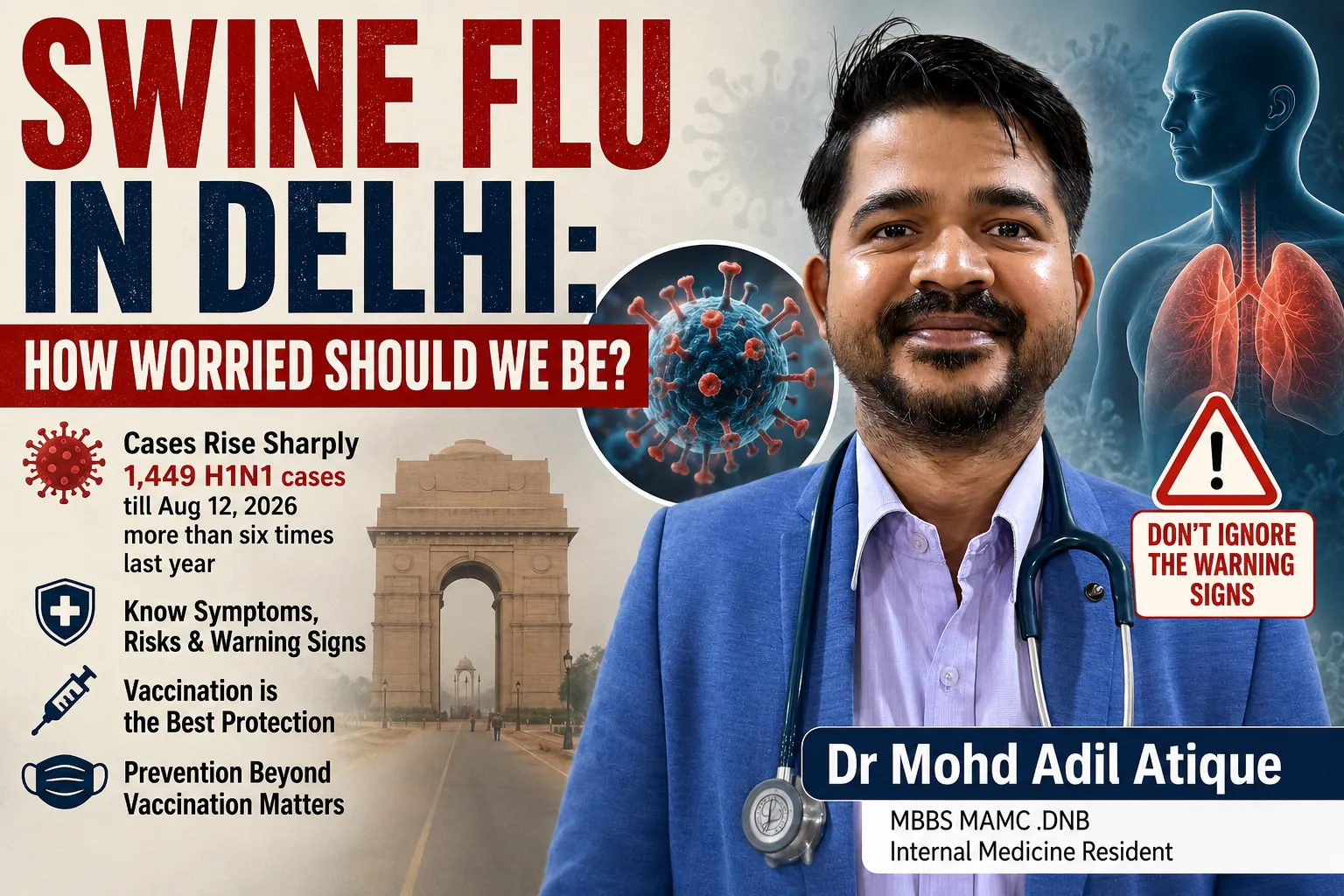
Dr Mohd Adil Atique
MBBS MAMC | DNB Internal Medicine Resident
Delhi is witnessing a significant rise in influenza A(H1N1), popularly known as “swine flu”, during the current season. According to recent reports based on National Centre for Disease Control data, Delhi had recorded 1,449 H1N1 cases up to August 12, 2026—more than six times the number reported during the corresponding period last year. The increase deserves attention, but it should not create unnecessary panic.
What exactly is “swine flu”?
H1N1 is a strain of influenza A. Although the term “swine flu” became widely known during the 2009 pandemic, H1N1 has subsequently become one of the seasonal influenza viruses circulating among humans. It spreads primarily through respiratory droplets and close contact with an infected person.
Influenza commonly begins suddenly. Fever, chills, dry cough, sore throat, headache, muscle and joint aches and pronounced fatigue are typical symptoms. Children may additionally develop vomiting, abdominal pain or diarrhoea, as well as calf muscle pain.
In uncomplicated influenza, fever commonly improves over several days, usually within 5 to 7 days, while cough and fatigue may continue for one to two weeks or sometimes longer.
Older adults, especially those aged 65 years and above, are among the groups most vulnerable to severe influenza. Age-related changes in immunity, combined with conditions such as diabetes, heart disease, chronic lung disease, kidney disease and other chronic illnesses, can reduce the body’s ability to cope with infection.
Influenza may not only cause pneumonia itself; it can also destabilise an existing medical condition. An elderly person with heart failure, COPD, asthma or diabetes may deteriorate considerably following an apparently ordinary influenza infection.
Young children, pregnant women, people with weakened immunity and individuals with chronic medical conditions are also at increased risk.
Most healthy individuals recover without major complications. However, certain warning signs should never be ignored.
Breathlessness, rapid or difficult breathing, chest pain, bluish discoloration of the lips, persistent or worsening fever, low oxygen saturation, severe weakness, dehydration, confusion or excessive drowsiness require prompt medical attention. In such cases, one should promptly contact or visit the nearest hospital.
Another important warning sign is “improvement followed by deterioration”—for example, a patient who appears to recover after a few days but subsequently develops renewed fever, worsening cough or breathing difficulty. This can indicate a complication such as pneumonia.
Treatment: Antibiotics are not for this flu
As far as treatment is concerned, antibiotics are not for this flu.
Treatment depends on the severity of illness and the patient’s risk profile. A healthy adult with mild influenza generally requires rest, adequate fluids and appropriate medication for fever and other symptoms.
One common mistake is starting antibiotics as soon as fever and cough appear. Antibiotics do not treat influenza because influenza is caused by a virus. They should be prescribed only when a bacterial infection is suspected or confirmed.
The principal antiviral drug used for influenza is oseltamivir.
Antiviral treatment is particularly important for patients with severe or progressive disease and those at high risk of complications. It is most effective when started within the first 48 hours of illness, but treatment should not necessarily be withheld merely because the patient presents later—particularly when the illness is severe or the patient belongs to a high-risk group. WHO clinical guidance supports early antiviral treatment in patients at risk of severe influenza.
Vaccination: the most important preventive measure
Vaccination remains one of the most effective ways of reducing influenza illness and, importantly, severe disease and complications.
Seasonal influenza vaccines are updated periodically because influenza viruses undergo continual antigenic changes. WHO has recommended a trivalent vaccine composition containing updated H1N1, H3N2 and influenza B components.
Annual vaccination is particularly advisable for people at increased risk of severe influenza, including:
- Adults aged 65 years and above
- Young children
- Pregnant women
- People with chronic respiratory diseases such as asthma and COPD
- Patients with diabetes, heart disease or chronic kidney disease
- Immunocompromised individuals
- Healthcare workers and others with substantial exposure to respiratory infections
For children, the vaccination schedule deserves special attention. Children from six months of age can receive influenza vaccination. According to Indian paediatric recommendations, a child receiving influenza vaccination for the first time generally requires two doses separated by at least four weeks; thereafter, annual vaccination is recommended.
Adults generally require one influenza vaccine dose every year. Vaccination should ideally be taken before or around the expected influenza season, but vaccination can still provide benefit while influenza viruses continue to circulate.
Prevention goes beyond vaccination
Vaccination is important, but it is not the only defence. People with fever and respiratory symptoms should stay home and avoid close contact with elderly family members, infants and other vulnerable individuals.
Wearing a mask in crowded indoor settings, improving ventilation, frequent handwashing and covering the mouth and nose while coughing or sneezing can reduce transmission. Children with fever should not be sent to school until they have recovered.
Families should also avoid self-prescribing antibiotics or antivirals. The decision to start oseltamivir should be based on the patient’s age, risk factors, severity, duration of symptoms and clinical assessment by a doctor only.
The current rise in H1N1 cases should be treated with preparedness rather than fear. Most people will recover, but severe influenza can be prevented.
For elderly people and those with chronic diseases, influenza should never be dismissed as “just another viral fever”. A few days of fever and cough may be uncomplicated, but progressive breathlessness, low oxygen levels or deterioration after initial improvement warrants urgent medical attention.