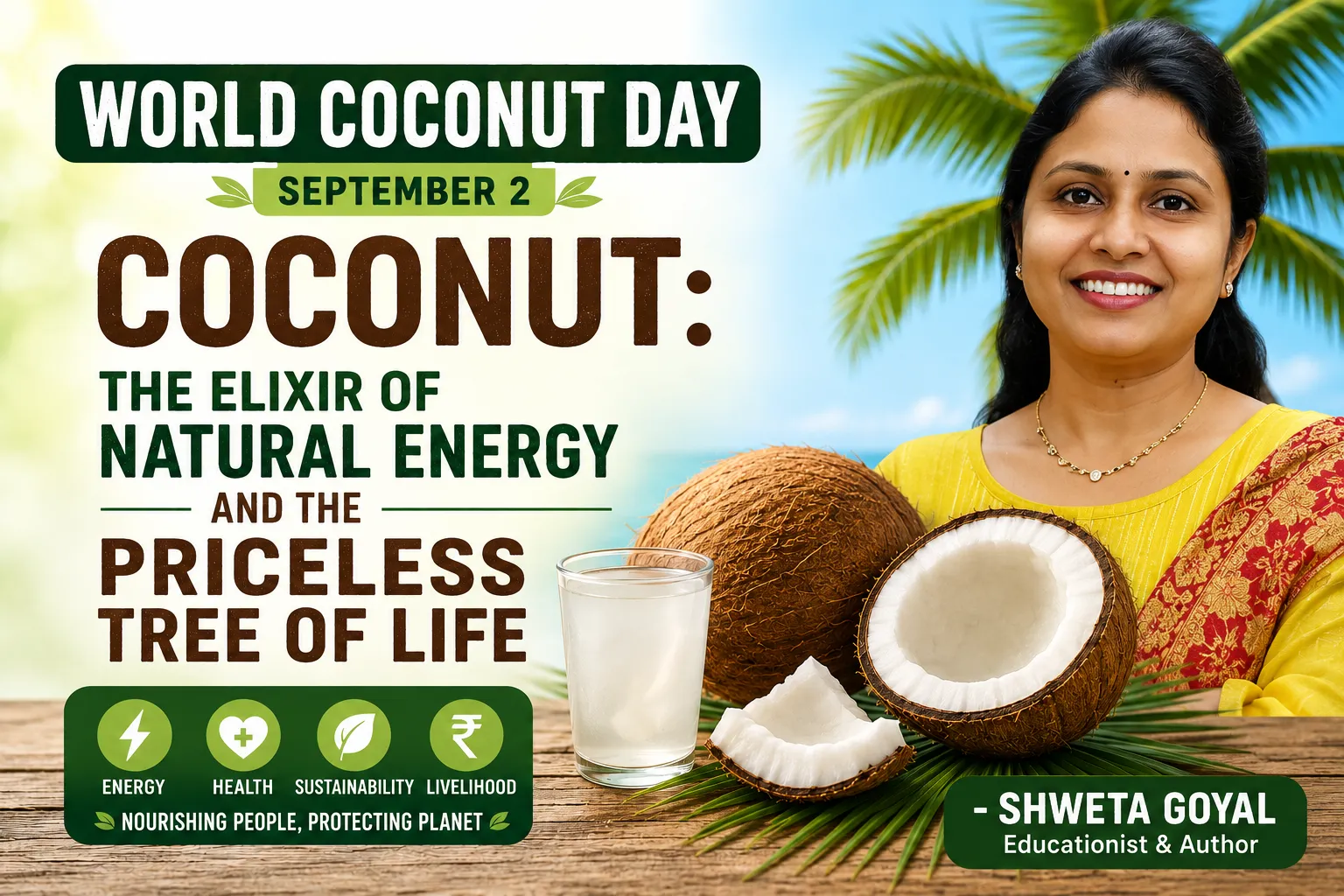
Special on World Coconut Day (September 2)
Coconut: The Elixir of Natural Energy and the Priceless Tree of Life
- Shweta Goyal
Every year, World Coconut Day is observed on September 2. This occasion is not only meant to highlight the importance of the valuable fruit known as coconut and its tree, but the day also serves as a means of reminding people around the world of its nutritional value, economic significance, cultivation, processing, utility, and role in global health and agriculture. The day is observed with numerous objectives, including helping people around the world understand the benefits of coconut; informing them about its nutritional and economic importance; educating people about coconut cultivation, processing and its many uses; understanding the significance of coconut in global health and agriculture; adopting new technological methods related to coconut; and addressing the existing challenges faced by coconut-related industries. It is observed in connection with the formation of the Asian and Pacific Coconut Community (APCC). The objective of this organization is to promote every activity related to coconut, improve the condition of coconut farmers, and work towards strengthening the coconut industry. World Coconut Day was first observed in 2009, and since then, this day has been dedicated to encouraging coconut cultivation and the industries associated with it. The APCC began this observance on the occasion of its 40th anniversary, and this year the organization is celebrating its 56th anniversary. Its headquarters are located in Jakarta, Indonesia, and almost all coconut-producing countries, including India, are its members.
The word coconut is believed to have originated from the Portuguese language. Formed from the combination of the words ‘coco’ and ‘nut’, this name has today become the worldwide identity of this remarkable fruit. Around 150 varieties of coconut are found in nearly 80 countries across the world. It is cultivated predominantly in tropical regions, and the livelihoods of millions of farmers depend upon it. Coconut is not called the tree of life without reason. Every part of this tree is useful to human beings in one way or another. The fruit serves as a source of food and drink, the leaves are used for roofing and weaving, its shell and husk are used in handicrafts, as fuel and for household requirements, while its sap is used to make sugar, vinegar and other products. This is why coconut is not merely a source of food but is also regarded as a symbol of prosperity and nourishment. In many cultures around the world, it is associated with good fortune and auspiciousness. Coconut is used in weddings, religious rituals and celebrations so that wishes for peace, prosperity and good health may be fulfilled in life.
World Coconut Day is also important from an environmental perspective. This occasion reminds us of the way the coconut tree contributes to maintaining ecological balance. Coconut trees help protect soil from erosion and promote sustainable agriculture. A particularly important feature is that almost every part of the tree can be utilized, leaving very little scope for waste. This is why the tree is also a symbol of sustainable development and a green lifestyle. The coconut tree is the only surviving species of the genus Cocos and belongs to the Arecaceae family of palms. The tree grows to a height of 60 to 100 feet and can live for nearly 80 years. However, it generally begins bearing fruit only after about 15 years of age. In India, the tree is found predominantly in states such as Tamil Nadu, Kerala, Karnataka, Andhra Pradesh and West Bengal. Coconut cultivation contributes approximately US$3.88 billion to India’s gross domestic product. Not only this, the crop provides food security and livelihoods to more than 12 million people in the country and directly employs around 600,000 people.
The importance of coconut is not limited to cultivation and the economy; it is also highly beneficial from a health perspective. The fruit is considered effective in improving digestion and helping control obesity. Coconut water is a beverage that provides immediate energy to the body and is a natural source of electrolytes. In conditions of heat and fatigue, it helps keep the body hydrated. Coconut water contains vitamin C, B-group vitamins and protein. It contains relatively low amounts of calories, carbohydrates and sugar and is almost fat-free. This is why it is placed in the category of health-promoting beverages. In addition, the potassium, magnesium and vitamin C present in coconut help in controlling high blood pressure.
From a nutritional perspective, coconut is an exceptionally rich fruit. It contains 38.67 percent copper, 52.17 percent manganese, 24.2 percent iron, 18.8 percent fibre, 8 percent zinc, 7.6 percent valine and 9.37 percent carbohydrates. All these nutrients help keep the body healthy, enhance facial radiance and strengthen immunity. Coconut is used in food, cosmetics and even decorative items. Along with being used in cooking, coconut oil is also considered highly beneficial for hair and skin. Compared with other oils, it is regarded as a healthy and natural option. Coconut milk is used in various dishes and sweets, while its fibre is used to make ropes, mats, carpets and doormats.
Speaking of the economic importance of coconut, it is a major source of income for farmers. Millions of small farmers earn their livelihoods through coconut cultivation. In addition, there are extensive employment opportunities in coconut-related processing industries. Several industries, including coconut oil, coconut milk, coconut powder, the coir industry, handicrafts, biofuel and beauty products, depend directly on coconut. This is why organizations such as the APCC continuously work towards developing and disseminating technologies related to coconut production and processing. New technologies in this sector not only increase productivity but also help maintain environmental balance.
(The author is an educationist active in the field of teaching for more than 18 Years)
Contact: 114, Gali No. 6/1, Gopal Nagar, M.D. Marg, Najafgarh, New Delhi-110043. Phone: 9034304041.
Email: shweta230283@gmail.com