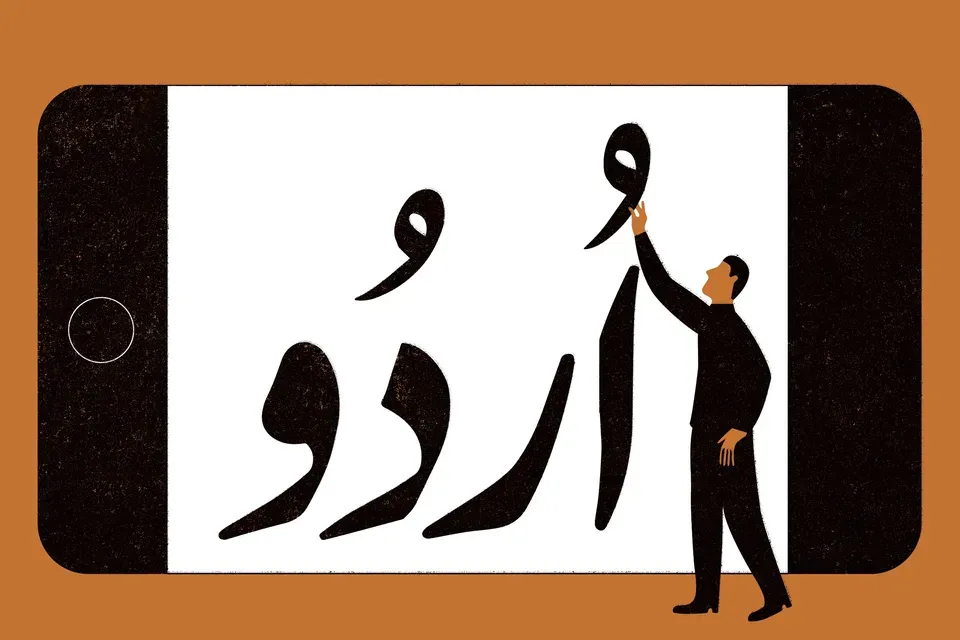
The Jammu and Kashmir government encountered scathing criticism from the people, and Kashmir-based opposition parties, for proposing to drop Urdu from the newly amended draft recruitment rules for revenue posts. Pertinent to mention Urdu is one of the official languages of J&K, mandatory for qualifying for revenue services. On April 10, the Revenue Department issued the draft Jammu and Kashmir Revenue Service Recruitment Rules for non-gazetted posts, inviting objections within 15 days.
The proposed amendments remove the earlier requirement of knowing Urdu for posts such as Naib Tehsildar, Girdawar and Patwari—positions that are central to maintaining land and revenue records. The move comes against the backdrop of a legal challenge and subsequent order by the Central Administrative Tribunal in July 2025, which stayed provisions of the 2009 rules mandating graduation with knowledge of Urdu. As per the fresh draft, the minimum qualification has been reduced to a graduation degree from a recognised university, without any Urdu language requirement. Before I focus on the pros and cons of the issue, I would like to inform readers briefly about the history and evolution of Urdu language in the India. Before the arrival of Muslims in the subcontinent, various local languages and dialects were prevalent here, such as Sanskrit, Prakrit, Apabhramsa, and the local dialects that originated from them. When Arab, Turk, Afghan, and Iranian Muslims came to India, they brought Arabic, Persian, and Turkish languages with them. A need was felt for a language that could serve as a common medium of communication among these conquerors, traders, Sufis, and local inhabitants—one that would be understandable to everyone. Out of this necessity, a new language was born, which was later called Urdu. In its early stages, Urdu was known by various names, such as “Hindavi,” “Hindustani,” “Dehlavi,” “Gujri,” “Dakhni,” and “Rekhta.” The basic structure of this language was based on the local Khari Boli, while Persian, Arabic, and Turkish words continued to be integrated into it.
Today, Urdu is counted among the major languages of the world. It is one of the major languages of India. A large number of Urdu speakers also reside in the Middle East, Europe, America, and the Gulf countries. It has maintained its popularity through films, journalism, music, television, and digital media. This language possesses a vast treasure of love, sophistication, culture, and aesthetic beauty.
The deletion of Urdu as a mandatory qualification for revenue department recruitment in Jammu & Kashmir has sparked significant debate, with critics highlighting several potential disadvantages for the local population. The primary disadvantages identified include:
1. Challenges Access to Historical Records:
For over 131 years, revenue and land records (such as Jamabandis and Shajras) have been maintained in Urdu. Removing Urdu requirement for new recruits, such as Patwaris and Naib Tehsildars, could make it difficult for officials to understand and process existing documentation. Experts warn that appointing staff without Urdu proficiency might necessitate hiring separate translators within revenue offices, leading to administrative delays and potentially eroding the credibility of governance in rural areas. Diluting Urdu’s role is seen by some as “administratively unsound,” as it breaks the historical continuity of the region’s governance systems
2. Reduced Opportunities for Local Youth:
Critics argue that the move could disproportionately impact local Kashmiri youth who have traditionally studied Urdu, potentially making it easier for candidates from outside the region or those without local linguistic roots to compete for these specific roles
3. Disadvantage for Existing Aspirants:
Many candidates have spent years preparing for these “elite” revenue examinations based on existing rules that required Urdu proficiency; sudden changes could render their preparation and investments obsolete.
4. Cultural and Social Erosion Loss of Linguistic Heritage:
Urdu is viewed as an integral part of Kashmir’s cultural identity, literature, and history. Its removal from official use is described by some local experts and political parties as an “attack on culture and civilization”. While J&K is linguistically diverse (Kashmiri, Dogri, Gojri, Pahari), Urdu has historically served as a common bridge between these communities. Removing it from the official administrative framework could weaken this unifying bond. The J&K administration’s move to drop Urdu as the sole mandatory qualification follows the 2020 Official Languages Act, which recognized five official languages: English, Urdu, Hindi, Dogri, and Kashmiri.
The evolution of the Urdu language is the result of a long historical process. It came into existence through the fusion of different civilizations, languages, and cultures, and over time, became a complete literary and cultural language. The greatest characteristic of Urdu is its openness, flexibility, and capacity to absorb. This is why Urdu is considered not just a language, but a symbol of the shared cultural soul of the subcontinent.
The fascinating language of Urdu may not be made a victim of ideological conflict; let it live in this democratic country.