Newspoint
Iran Rejects Ceasefire Offer from the US
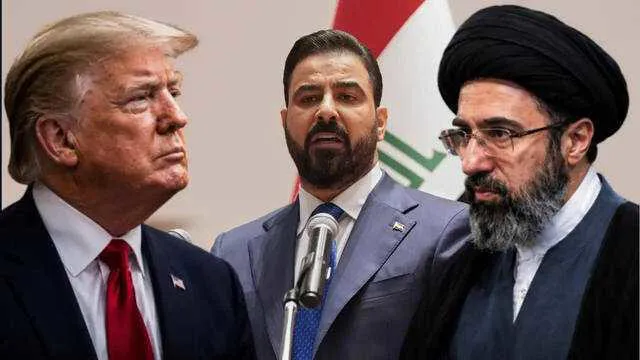
Iran has turned down a ceasefire proposal from US President Donald Trump, which was communicated to Tehran via Iraqi Prime Minister Ali al-Zaidi, as reported by officials from both Iran and Iraq. The diplomatic initiative has reportedly faltered as hostilities between Washington and Tehran escalate, with both nations intensifying military actions throughout the Middle East. Iranian representatives indicated that the proposal did not adequately address the future of the Strait of Hormuz, a critical point for any potential agreement.
The mediation attempt followed al-Zaidi's recent discussions at the White House with President Trump, after which he traveled to Tehran with a senior Iraqi delegation. Officials cited by a prominent news outlet noted that this was the only formal ceasefire proposal currently being considered. However, Iranian officials concluded that a temporary cessation of hostilities would be of little benefit if the contentious issue surrounding the Strait of Hormuz remained unresolved.
During the Iraqi delegation's visit, they met with key Iranian figures, including President Masoud Pezeshkian, Parliament Speaker Brig Gen Mohammad Bagher Ghalibaf, and Foreign Minister Abbas Araghchi. These meetings underscored Baghdad's ongoing attempts to act as a mediator between Washington and Tehran, capitalizing on its close political and security relationships with both nations. Despite these efforts, no significant progress was made.
After the discussions, Foreign Minister Abbas Araghchi acknowledged that the Iraqi Prime Minister had shared his insights from Washington. However, he rejected the notion that stalled diplomacy was due to poor communication, asserting that Tehran and Washington already had ample mediators. "The issue is not about delivering messages," Araghchi stated on Iranian state television. "The real problem lies in America's illogical, greedy, and controlling perspective."
Iranian officials conveyed to a major news outlet that the ceasefire proposal was unacceptable as it did not resolve the control issue over the Strait of Hormuz. This narrow maritime route is crucial for a significant portion of global oil exports and has increasingly become the focal point of the ongoing conflict. As tensions have risen, the US has ramped up military operations to safeguard commercial shipping, while Iran has aimed to bolster its influence over maritime traffic in the area.
This disagreement illustrates how the conflict has shifted from traditional military confrontations to a broader struggle for regional maritime supremacy. Tehran seems unwilling to agree to any arrangement that restores peace without addressing what it perceives as the long-term power dynamics in the Gulf. For the US, ensuring freedom of navigation through Hormuz is a vital strategic goal due to its significance for global energy markets.
Despite ongoing diplomatic efforts through regional intermediaries, military actions have intensified on multiple fronts. Reports indicate that American forces have broadened their strikes beyond military targets to include critical infrastructure such as airports, railways, bridges, and seaports, while Iran continues to launch ballistic missile and drone attacks against US military installations in the region. This simultaneous pursuit of diplomacy and military pressure suggests that neither side is currently willing to significantly de-escalate.
Two Iranian officials informed the news outlet that Tehran's military is preparing for the possibility of a larger regional conflict if President Trump authorizes strikes on Tehran or other vital infrastructure. They indicated that Iran could retaliate by increasing attacks on Israeli targets, including Tel Aviv, and by encouraging its Houthi allies in Yemen to disrupt shipping through the Bab al-Mandab Strait, another crucial maritime chokepoint linking the Red Sea to the Gulf of Aden.
On Thursday evening, Iranian government supporters gathered in Tehran's Azadi Square for pro-war demonstrations, showcasing military vehicles carrying Iranian-made ballistic missiles. This public display reinforced Tehran's stance of preparing for a prolonged confrontation rather than anticipating an immediate diplomatic resolution. With Iraq's latest mediation effort failing and both sides continuing military operations, the chances for an early ceasefire appear increasingly slim.