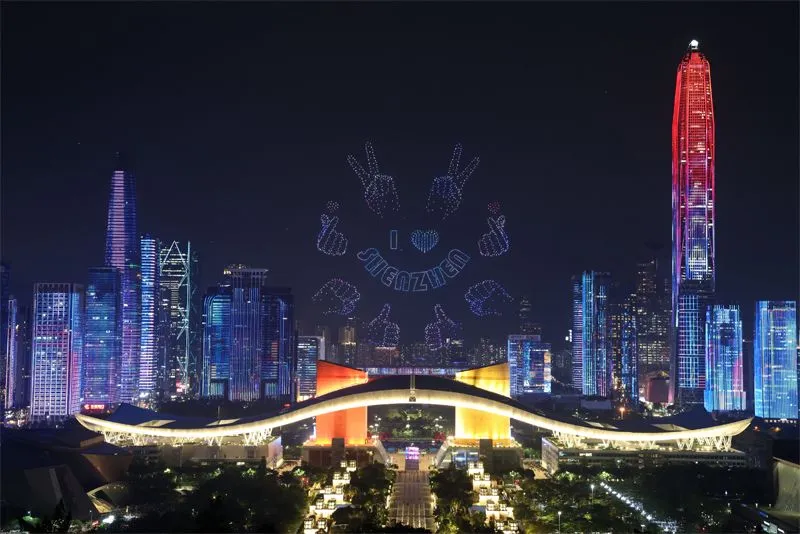
BEIJING, Aug 10 : China has cancelled scheduled drone shows at tourist attractions across the country amid stepped-up scrutiny of low-altitude aviation following a small plane crash in Beijing that heightened security concerns.
Tourist attractions and event organisers in 11 provinces and regions, including Inner Mongolia, Gansu, Shandong, Guangdong and Hainan, announced last week that drone performances scheduled from Friday onwards have been cancelled, the Hong Kong-based South China Morning Post reported on Monday.
The move comes after authorities beefed up aviation security following the crash of a small training plane into a skyscraper in Beijing's business district in June. The pilot was killed and 13 people were injured in the incident.
The aircraft had entered the main urban area despite restrictions on low-altitude flights, raising concerns over the security risks posed by small aircraft and drones.
The crash site was also relatively close to Zhongnanhai, the heavily guarded compound that houses China's top leadership, including President Xi Jinping.
Authorities have not yet released full details of the investigation.
An internal document purportedly issued by an unnamed drone company and circulated online last week said it had received an order from the People's Liberation Army's Southern Theatre Command to suspend drone flights, the Post report said.
According to the document, all drone flights across six provinces under the jurisdiction of the Southern Theatre Command would be suspended from Friday, without specifying when they would resume.
The developments come as China promotes the "low-altitude economy" as an emerging sector, encompassing activities, businesses and services conducted below 1 km (3,280 feet), including drone operations.
Drones are widely used in China in daily operations such as food deliveries, industrial inspections, pesticide spraying, aerial photography and light shows, besides applications in agriculture and manufacturing.
Authorities appear to be tightening risk management for drones and general aviation as they seek to address new threats associated with their growing use.
A general aviation training school told the Post that authorities had ordered flight-training institutions nationwide to suspend operations for "rectification" following the Beijing crash and conduct mandatory safety training.
Beijing has also, since May, required public security approval to sell, rent or transport drones and their core components into or within the capital.
The country has tightened civilian drone restrictions in recent years. More than 15 major Chinese cities have imposed blanket bans on civilian drone flights in central areas, with some restrictions introduced without formal policy announcements, according to the Post.
The measures have also set back a move to use drones to replace human workers in infrastructure inspections within Shanghai's power grid.
In October last year, China's top legislature -- the Standing Committee of the National People's Congress -- revised the Public Security Administration Punishments Law to classify illegal drone use as conduct endangering public security.
Serious violations can attract detention and, in some cases, criminal prosecution. (PTI)