(BK Prof. ( Dr.) Jayadeba Sahoo, Faculty, Brahma Kumaris & Professor (Ex-Dean & Head), Faculty of Education, Rajiv Gandhi (Central) University, Itanagar; Cell- 8837245051, 9436042658; Email: jayadeba.sahoo@rgu.ac.in , drjayadeb12@gmail.com )
"May there be peace in the heavens; peace in the atmosphere; peace upon Earth; peace in waters; peace in herbs; peace in vegetation; peace among divine forces; peace in the cosmos; peace in all things."
Within the resplendent cathedral of this Vedic Symphony of Celestial Peace and Earthly Kinship revelation—where thought blossoms into metaphysical luminosity and language acquires the cadence of eternity—there reverberates a sonorous invocation whose spiritual amplitude transcends chronology and geography.
Prologue: Environmental Crisis and Human Forgetfulness
Today humanity faces climate change, biodiversity collapse, deforestation, water scarcity, and environmental degradation on unprecedented scales. Paradoxically, technological advancement has often deepened ecological separation. We have become increasingly capable of controlling nature while becoming progressively incapable of living harmoniously with it. The environmental crisis may therefore not merely be a scientific problem but a crisis of consciousness. We remember our rights over Earth but forget our responsibilities toward her.
Across the colossal Himalayan arc—where snow-veiled summits converse silently with celestial winds, where glacial rivers descend like sacred hymns from the lap of eternity, and where forests breathe with the rhythm of ancient cosmologies—there blooms, every spring, a botanical miracle of almost transcendental magnificence: The Himalayan Rhododendron- Scarlet as sacrificial fire, Crimson as the pulse of living mountains. Radiant as though dawn itself had descended upon the alpine wilderness.
Yet these resplendent blossoms are far more than ornamental spectacles adorning the Himalayan slopes. They are ecological sentinels, climatic storytellers, cultural companions, medicinal repositories, pollinator-sustaining guardians, and silent witnesses to one of the greatest crises confronting contemporary civilization—the unraveling relationship between humanity and nature. Today, as climate instability intensifies and biodiversity vanishes at unprecedented rates, the Himalayan Rhododendron emerges not merely as a flower of beauty, but as a symbol of ecological memory and environmental awakening.
The Himalayas: Geography Transformed into Sacred Ecology
The Himalayas are often described in geographical language—as mountain systems, biodiversity hotspots, climatic regulators, and hydrological reserves. Yet such descriptions, however scientifically accurate, remain profoundly incomplete.
For millennia, the Himalayas have occupied a sacred place within the civilizational consciousness of South Asia. Ancient Indian philosophy did not perceive mountains merely as physical elevations but as living embodiments of spiritual energy and cosmic order.
The Atharva Veda declares:
“माता भूमिः पुत्रोऽहं पृथिव्याः”- Mātā bhūmiḥ putro'haṃ pṛthivyāḥ”
"The Earth is my mother, and I am her child."
This sublime verse, originating from the Bhūmi Sūkta of the Atharva Veda (12.1.12), transcends being merely a poetic expression and encapsulates the ethical grandeur and ecological sensitivity that modern industrial civilization has tragically forgotten creating an era of ecological anxiety. It is a civilizational philosophy, a spiritual ecology, and a timeless declaration of humanity’s intimate bond with nature.
The Himalayas are not simply landscapes. They are living ecological scriptures. They regulate monsoons, sustain rivers feeding billions of people, preserve extraordinary biodiversity, stabilize climatic systems, and nurture indigenous communities whose cultures evolved in intimate dialogue with forests, rivers, herbs, and mountain ecosystems. Yet today, this fragile ecological sanctuary stands imperiled.
Glaciers are retreating. Rainfall patterns are becoming erratic. Forests are fragmenting. Species are migrating upward in search of cooler habitats. And entire ecological rhythms are becoming disoriented under the mounting pressures of climate change.
Rhododendrons: The Scarlet Flame of Himalayan Biodiversity
Among the Himalayan ecosystem’s innumerable botanical treasures, Rhododendrons occupy an exceptionally revered position. Belonging to the family Ericaceae, Rhododendrons comprise over a thousand species globally, with the Eastern Himalayas representing one of the richest centres of diversity on Earth. Arunachal Pradesh, Sikkim, Nepal, Bhutan, and adjoining Himalayan regions harbour a spectacular array of these species across varying altitudes and ecological niches. When spring unfolds across the mountains, Rhododendrons transform entire valleys into rivers of colour.
The forests blaze with crimson fire. Mist-laden slopes glow with scarlet radiance. Snow peaks stand in silent contrast to oceans of blooming red. It is as though the Himalayas themselves begin to speak through flowers. But their importance transcends aesthetics. Rhododendrons perform indispensable ecological functions: supporting pollinator networks, stabilizing mountain soils, preserving watershed integrity, maintaining forest biodiversity, and serving as climatic indicators sensitive to environmental change.
In ecological science, flowering cycles—known as phenology—often reveal subtle climatic disturbances. Shifts in blooming periods may indicate rising temperatures, changing precipitation patterns, or broader ecosystem instability. Thus, Rhododendrons become biological narrators of climate change.
The Deep Meaning of “Socio-Ecological Interactions”
One of the most intellectually profound dimensions of current ecological discourse lies in understanding the concept of “Socio-Ecological Interactions.” This framework recognizes a truth long understood by indigenous civilizations but frequently ignored by industrial modernity: Human societies and ecological systems are inseparable. Forests influence culture. Climate shapes rituals. Flowers shape folklore. Mountains shape spirituality. And communities shape ecosystems in return. Rhododendrons exist not merely within forests but within cultural memory. Across Himalayan communities, these flowers appear in: oral traditions, sacred rituals, folk medicine, seasonal celebrations, culinary practices, and indigenous ecological observations.
In many mountain regions, local communities have historically monitored flowering patterns to anticipate seasonal transitions and climatic variations. Such observations constitute highly sophisticated environmental intelligence accumulated through generations of lived interaction with ecosystems.
Modern science increasingly recognizes that conservation cannot succeed by excluding indigenous communities from ecological governance. The future of environmental sustainability depends upon collaboration between: scientific institutions, universities, local communities, indigenous knowledge holders, policymakers, and environmentally conscious citizens.
The Climate Crisis and the Silent Distress of the Mountains
Climate change in the Himalayas does not always arrive dramatically. Often, it unfolds through silence. A flower blooming earlier than usual. A pollinator disappearing from familiar valleys. A medicinal plant retreating toward higher altitudes. A drying spring once considered eternal.
These subtle ecological disruptions collectively signify profound environmental instability. Scientists warn that Himalayan warming is occurring at accelerated rates compared to many global regions. Such changes threaten biodiversity, water security, agriculture, and local livelihoods. Rhododendrons, because of their sensitivity to climatic fluctuations, become crucial ecological indicators. Their changing phenology offers insights into: temperature shifts, ecosystem stress, pollinator disruptions, and habitat transformation. The mountains are speaking. And Rhododendrons are among their most eloquent voices.
Indigenous Wisdom: Ancient Knowledge for Planetary Survival
One of the greatest intellectual tragedies of modernity has been the dismissal of indigenous ecological knowledge as primitive or unscientific. In reality, many indigenous communities possess deeply refined environmental understanding derived from centuries of close observation and sustainable interaction with nature. The Himalayan peoples have long understood: seasonal ecological rhythms, forest regeneration, medicinal plant behaviour, watershed preservation, and biodiversity patterns. Their relationship with nature is not extractive but reciprocal. The Isha Upanishad proclaims:
“ईशावास्यमिदं सर्वं यत्किञ्च जगत्यां जगत्॥” "īśāvāsyamidaṃ sarvaṃ yatkiñca jagatyāṃ jagat"
“The entire universe is permeated by the Divine.”
This philosophy generates reverence rather than domination. In contrast, contemporary consumerist civilization often views forests merely as timber reserves, rivers merely as water resources, and mountains merely as exploitable terrain. The ecological crisis is therefore not merely environmental—it is philosophical. Humanity has forgotten how to belong to nature.
From Knowledge Exchange to Community-led Monitoring
Perhaps the most transformative development in contemporary conservation practice is the rise of community-led ecological monitoring. This approach recognizes that biodiversity protection cannot remain confined within laboratories, policy reports, or centralized institutions.
Conservation becomes truly sustainable only when local communities emerge as active ecological custodians. Community-led monitoring may involve: documenting flowering cycles, recording biodiversity changes, observing forest health, tracking pollinator populations, mapping climate impacts, and preserving ecological knowledge.
This participatory model democratizes environmental stewardship. Villagers become biodiversity observers. Students become ecological ambassadors. Citizens become conservation partners. Such approaches also strengthen environmental literacy among younger generations while creating bridges between traditional knowledge and scientific methodology. The future of conservation belongs not to isolated expertise but to collaborative ecological citizenship.
Universities as Guardians of Ecological Civilization
Universities located within biodiversity-rich regions carry extraordinary responsibilities. Institutions situated amidst the Himalayas must transcend conventional academic boundaries and emerge as centres of: ecological research, sustainability innovation, indigenous knowledge preservation, citizen science, and climate resilience.
Education can no longer remain detached from environmental reality. The environmental crisis demands interdisciplinary thinking integrating: botany, ecology, anthropology, climate science, ethics, sociology, and indigenous studies. Young scholars must be trained not only as professionals but as custodians of planetary wellbeing.
Rhododendrons and the Philosophy of Resilience
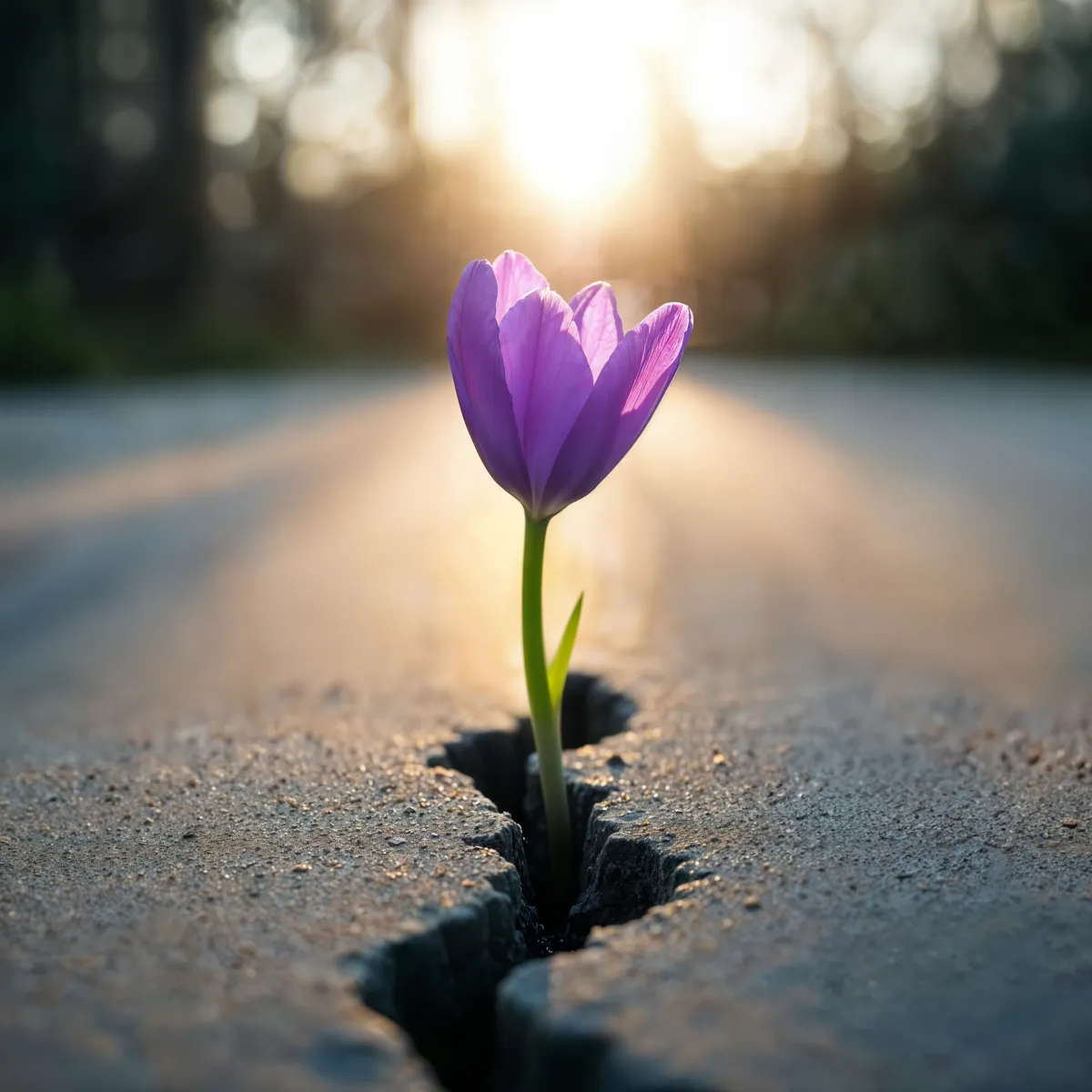
There is something deeply symbolic about Rhododendrons blooming amidst harsh Himalayan terrains. Surrounded by snow, wind, uncertainty, and ecological fragility, they still flower magnificently. They embody resilience. They remind humanity that beauty and survival are not opposites. Even in adversity, life seeks renewal. At a time when climate anxiety and ecological despair increasingly dominate global consciousness, these flowers offer a philosophical lesson: Hope must bloom even in difficult landscapes.
Prologue: Toward an Ecological Renaissance
The Rhododendron teaches us a timeless philosophy. Even amidst harsh cliffs… freezing winds… and difficult terrain… it blooms magnificently. What a profound lesson for humanity! In adversity—bloom. In ecological uncertainty—preserve hope. In civilizational confusion—protect harmony.
The future of humanity depends not merely upon technological advancement but upon ecological wisdom. We stand at a civilizational crossroads. One path leads toward continued ecological exploitation, biodiversity collapse, climatic instability, and spiritual alienation from nature. The other leads toward ecological coexistence, participatory conservation, indigenous wisdom, and sustainable living. The Himalayan Rhododendron stands at this intersection as both warning and inspiration. It asks humanity a profound question: Can civilization rediscover harmony before ecological breakdown becomes irreversible?
The Bhagavad Gita (Chapter 13, Verse 27/28) offers timeless guidance:
“समं सर्वेषु भूतेषु तिष्ठन्तं परमेश्वरम्॥” - "samaṃ sarveṣu bhūteṣu tiṣṭhantaṃ parameśvaram"
“The Divine resides equally in all beings.”
If humanity truly embraces this vision, environmental ethics will cease to be optional policy frameworks and become sacred civilizational responsibilities. The conservation of Rhododendrons is therefore not merely about saving flowers. It is about preserving the ecological soul of the Himalayas. It is about protecting the intricate web connecting biodiversity, climate, culture, spirituality, and human survival itself. And perhaps, in listening carefully to the crimson blossoms upon Himalayan slopes, humanity may yet rediscover the forgotten language of coexistence.
Let us therefore pledge today—not merely to study nature…but to stand beside nature. Not merely to document biodiversity… but to defend biodiversity. Not merely to admire Himalayan flowers… but to preserve Himalayan futures.