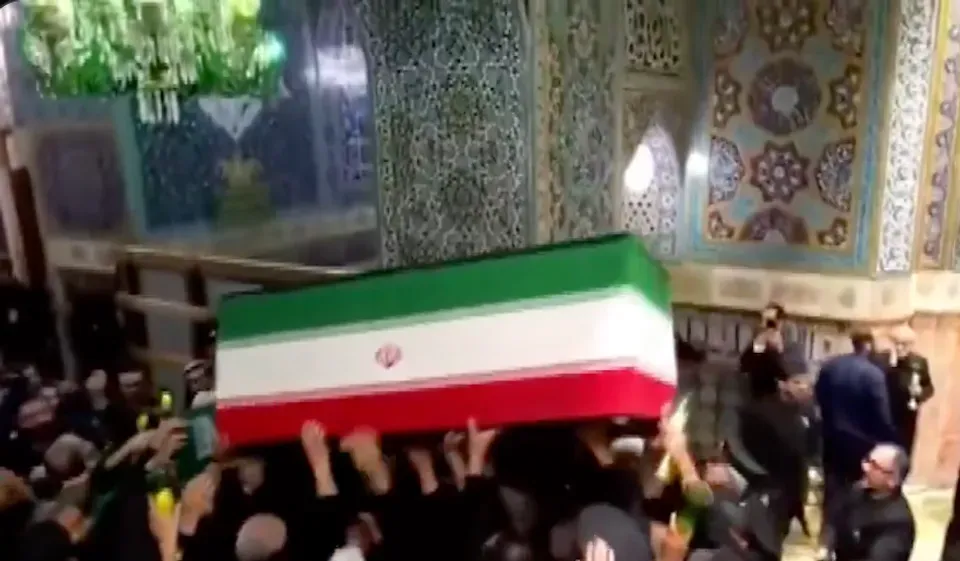
Iran has concluded a seven-day state funeral for its late Supreme Leader Ayatollah Ali Khamenei, with authorities claiming that more than 15 million mourners participated in ceremonies held across Iran and Iraq.
Khamenei, who led Iran for nearly 37 years, was laid to rest in his hometown of Mashhad, bringing to an end one of the largest funeral processions in the country's modern history. The funeral began last Saturday and passed through several major cities, including Tehran, Qom, Najaf and Karbala, before concluding in Mashhad.
The week-long ceremonies saw millions of mourners gather along procession routes, at mosques and major Shiite shrines. Iranian state media described the turnout as a demonstration of national unity and regional solidarity, while the funeral also drew large crowds in the Iraqi holy cities of Najaf and Karbala.
Authorities imposed extensive security measures throughout the funeral period, including road closures, flight restrictions and heightened deployment of security personnel to manage the massive crowds.
Khamenei became only the second ruler in Iran's history to be buried in Mashhad, following Nader Shah, who was laid to rest there in 1747.
The funeral unfolded amid continued regional tensions following the conflict that claimed Khamenei's life. Despite the ongoing geopolitical developments, the week-long mourning ceremonies remained the central focus across Iran, with millions paying their final respects to the country's longest-serving Supreme Leader.
Iranian officials described the funeral as one of the largest public gatherings in the country's history, with participation spanning seven days and two countries.
However, the funeral concluded under the shadow of renewed military escalation in the Middle East.
The United States launched fresh airstrikes across Iran early Thursday, targeting about 90 sites that Washington said were linked to Tehran's military capabilities and threats to navigation in the Strait of Hormuz. The US military said the operation was intended to further weaken Iran's ability to disrupt international shipping.
Iran responded by launching missiles and drones towards several US-allied countries in the region, including Bahrain, Kuwait, Qatar and Jordan. Air defence systems intercepted most of the incoming projectiles, although Kuwait reported one person injured by falling debris.
Iran's Health Ministry said the latest wave of US strikes killed at least 14 people and injured 78 others, most of them members of the armed forces.
Iranian officials also accused the United States of carrying out strikes near the country's only nuclear power plant at Bushehr, although US Central Command did not confirm targeting the facility.
The renewed exchange of attacks has raised fears that the fragile ceasefire announced last month could collapse completely.
US President Donald Trump accused Iran of violating the ceasefire by attacking commercial vessels in the Strait of Hormuz and warned of a stronger military response if such incidents continued.
"This is in retribution for yesterday's bombing of ships by Iran. If it happens again, it will get much worse," Trump said on social media.
Iran rejected the accusations and maintained that it would respond to any military action targeting the country. Parliament Speaker Mohammad Bagher Qalibaf said, "If you strike, you'll get hit," while Foreign Minister Abbas Araghchi held consultations with regional leaders, including counterparts from Saudi Arabia, Turkey and Oman, in an apparent effort to reduce tensions.
Despite the renewed violence, diplomatic efforts to negotiate a permanent ceasefire are expected to resume following the completion of Khamenei's funeral. The talks are expected to focus on reopening the Strait of Hormuz, easing regional tensions and addressing Iran's nuclear programme.