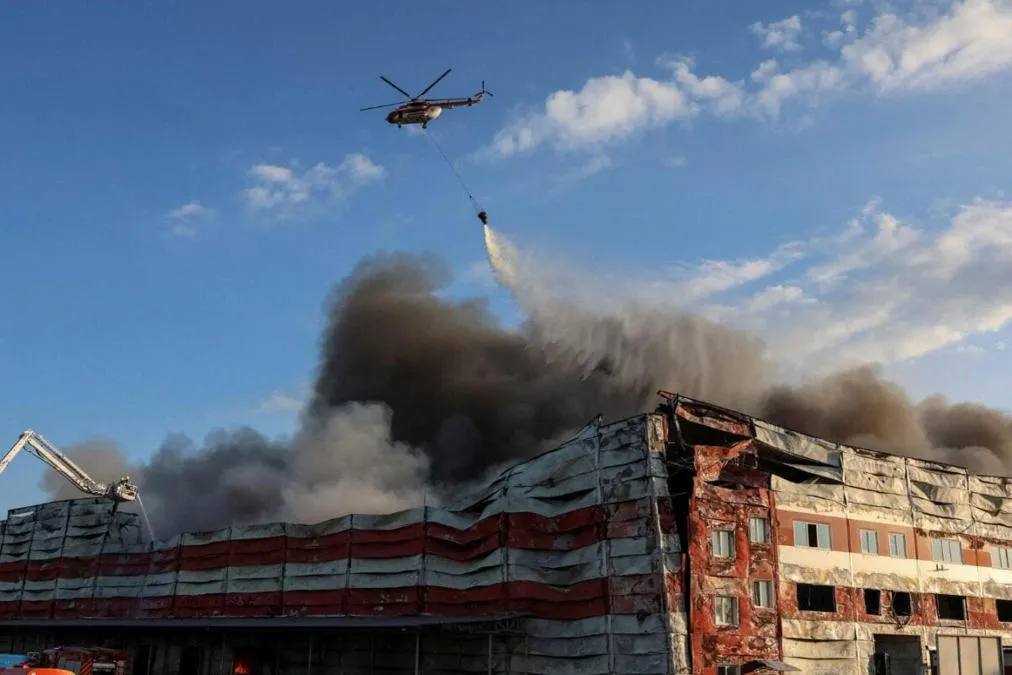

Russia on Sunday launched one of its largest and heaviest ballistic missile and drone assaults against Ukraine in a brutal, five-hour overnight barrage targeting Kyiv and other cities. The attack involved around 41 ballistic missiles (including Iskander-M and hypersonic Zircon missiles) and over 125 attack drones, which heavily pounded at least six districts of the capital.
Why now? News18 explains the four reasons.
THE ATTACK
The attack was primarily focused on Kyiv, though strikes and debris were recorded in multiple regions, including Kharkiv, Sumy, Zaporizhzhia, and Odesa.
Across the country, at least six people were killed and dozens were injured.
Falling debris and direct strikes caused fires and severe destruction to apartment buildings, supermarkets, a shopping center, and an underground pedestrian passage at a metro station.
Ukrainian forces successfully intercepted a large number of the drones (108 out of 125) and almost half of the ballistic missiles (18 downed).
THE DIPLOMATIC CONTEXT
Ukrainian President Volodymyr Zelensky characterised the raid as one of the most massive ballistic attacks the capital has endured since the full-scale invasion began, and reiterated urgent appeals to Western allies for more air defense interceptors.
The Russian Defense Ministry stated that the strikes targeted Ukrainian military infrastructure, including drone production plants, logistics centers, and fuel depots.
This massive bombardment closely followed a massive, coordinated Ukrainian drone assault that hit deep into Russian territory, targeting e-commerce warehouses in the Moscow and Tambov regions. Ukrainian naval and maritime forces also struck several Russian oil tankers in the Black Sea in an effort to disrupt Russia’s supply lines.
TIMING AND SCALE: 4 REASONS WHY
Security analysts and military reports point to four distinct reasons for the timing and scale of this specific assault:
1. Exploiting Critical Air Defence Shortages: Ukraine is currently facing a drastic shortage of Patriot interceptor missiles, which are the only Western-supplied weapons capable of stopping heavy ballistic strikes. Knowing that Ukraine must ration its remaining ammunition, Russia paired 41 heavy missiles with a staggering 125 drones. This intentionally overloaded the tracking radars, causing Ukraine’s defense grid to fail to stop more than half of the incoming ballistic threats, say experts.
2. Direct Retaliation for Deep Drone Strikes: The escalation follows highly successful Ukrainian drone strikes inside Russia. Just 24 hours prior, Ukrainian long-range drones struck a major Wildberries facility (the Russian equivalent of Amazon) in Elektrostal, sending massive smoke plumes across Moscow. Ukraine also targeted three Russian oil tankers in the Black Sea and multiple oil depots to choke Moscow’s military fuel lines. Russia used this massive strike as direct, heavy-handed retribution.
3. Capitalising on Kyiv’s Political Chaos: The timing deliberately weaponized a rare moment of internal instability within Ukraine. Mass street protests have filled Kyiv following President Volodymyr Zelenskyy’s abrupt decision to sack Defense Minister Mykhailo Fedorov. Russia targeted the capital during these civilian disruptions to amplify psychological panic and maximize political pressure on Zelenskyy.
4. Moscow’s Stated Military Targets: According to the Russian Ministry of Defense, the assault was aimed at neutralising high-tech production sites. Moscow claimed the missiles targeted plants manufacturing Ukrainian “Flamingo” drones, parts for Neptune guided missiles, and dual-use logistical warehouses.
With agency inputs