Srinagar, Aug 06: The mountains of Jammu and Kashmir are sending an unmistakable warning. What was once regarded as a rare weather phenomenon has rapidly evolved into one of the region's most pressing climate concerns, with official data revealing a staggering 40-fold increase in cloudburst incidents in just four years.
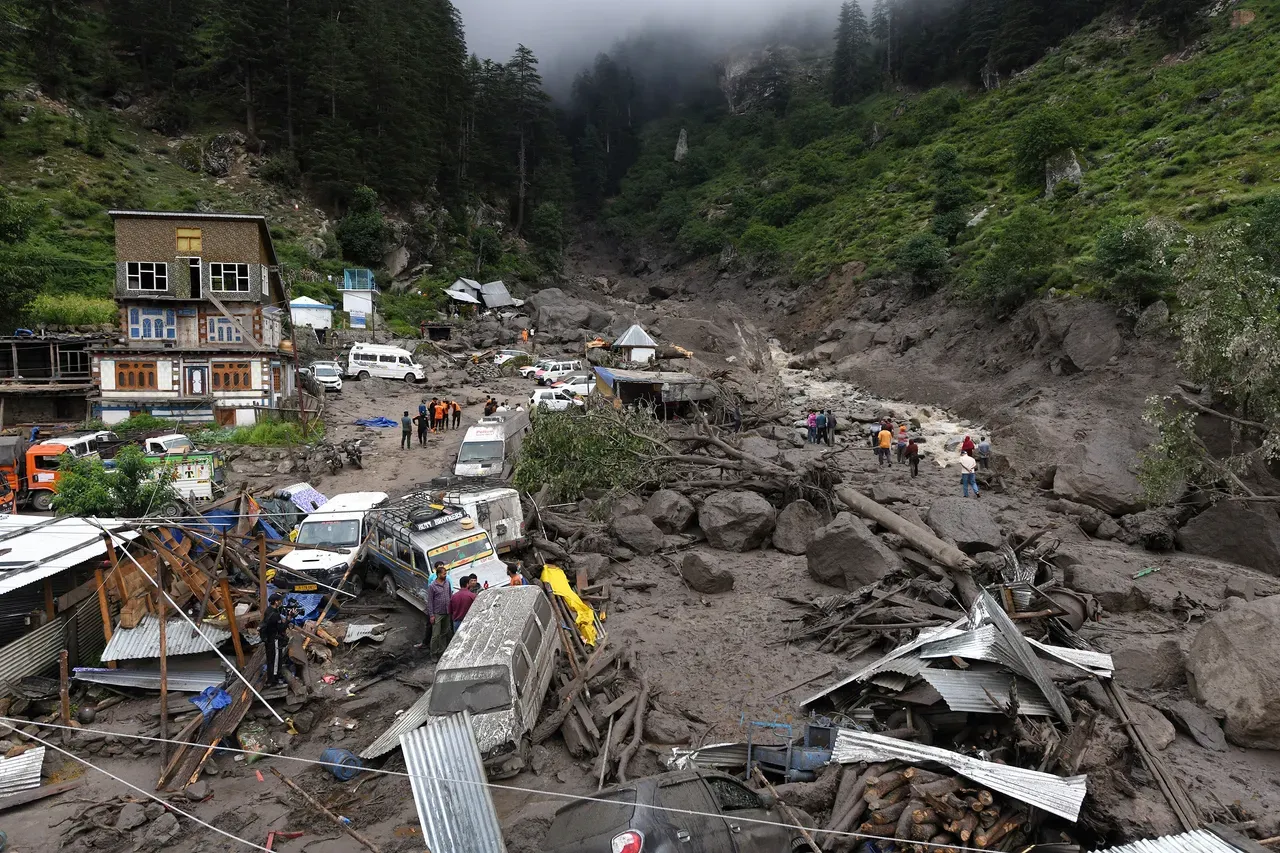
From a single cloudburst in 2022, the number has climbed to 40 incidents by August 6, exposing the growing vulnerability of the fragile Himalayan ecosystem to climate change and extreme weather. On July 9, 2022, 16 Amarnath pilgrims died in a deadly cloudburst near Pahalgam.
The latest cloudbursts were reported from Nandimarg in Kulgam district and Uri in north Kashmir, where intense rainfall triggered a massive surge in local streams and nallahs, causing panic among residents and damaging property in vulnerable areas.
Meanwhile, the overall weather-related death toll has risen to 32 after Shabir Ahmad lost his life when he was struck by lightning in the Keran area of Kupwara.
The official figures paint a disturbing picture—one cloudburst in 2022, four in 2023, eight in 2024, 15 in 2025 and 40 now in 2026 till August 6. The rise has been accompanied by an increase in flash floods, landslides and destruction across several districts, damaging homes, roads, bridges, agricultural land and public infrastructure while claiming lives and displacing families.
This year alone, cloudbursts have been reported from Kishtwar, Doda, Ramban, Kupwara, Bandipora, Baramulla, Uri, Kulgam, Anantnag, Reasi, Rajouri and Poonch, highlighting that the threat is no longer confined to a few vulnerable pockets but is spreading across the Union Territory.
Experts say the trend reflects a changing climate rather than isolated weather events. Senior environmentalist Dr Tanveer Ahmad Khan said the sharp increase should be viewed as one of the clearest indicators of climate change unfolding in the Himalayas.
"The Himalayas are warming faster than many other mountain regions of the world. A warmer atmosphere holds more moisture. When moisture-laden clouds are forced to rise rapidly over steep mountain slopes, they release enormous quantities of rain over a very small area within a short time. That is a cloudburst, and these conditions are becoming increasingly common," he said.
He said the rise in such events also mirrors the degradation of the region's natural ecosystems.
"Deforestation, shrinking wetlands, encroachment on floodplains, hill cutting and unplanned urbanisation have weakened nature's capacity to absorb heavy rainfall. Climate change and ecological degradation are now working together to amplify disasters," he said.
Climate expert Dr Touseef Bhat said Kashmir's rainfall pattern has undergone a fundamental shift over the past decade: "Earlier, rainfall was generally spread over longer durations. Today, we are witnessing short-duration, high-intensity rainfall events. The interaction between western disturbances and the southwest monsoon has become more erratic due to rising temperatures, increasing the likelihood of cloudbursts and flash floods."
According to meteorologists, every one-degree Celsius rise in atmospheric temperature allows the air to hold nearly seven per cent more moisture, significantly increasing the intensity of rainfall when conditions trigger precipitation.
The India Meteorological Department has repeatedly warned that active monsoon conditions interacting with western disturbances are producing extreme rainfall episodes across the Himalayan region. Such systems, combined with the Valley's complex topography, can rapidly trigger cloudbursts in mountainous terrain.
Scientists also point to long-term environmental changes. Glaciers in the Kashmir Himalayas continue to retreat, average temperatures are rising, snow cover is shrinking, and rainfall patterns are becoming increasingly erratic. These changes are altering the region's hydrological cycle and increasing the frequency of extreme weather events.
Environmentalists warn that unchecked developmental activities have further heightened disaster risks. Extensive road widening, indiscriminate construction on unstable slopes, quarrying, loss of forest cover and encroachments along streams have reduced the landscape's natural resilience.
Dr Khan stressed that climate adaptation must become an immediate priority. "The numbers themselves tell the story. From one cloudburst to forty in four years is not a coincidence; it is a warning. We need better forecasting systems, Doppler weather radars, hazard mapping, stronger early warning mechanisms and strict protection of forests and wetlands. Otherwise, such disasters will become even more frequent," he said.
Dr Bhat echoed the need for science-based planning: "Disaster preparedness has to move from response to prevention. Every village in vulnerable mountain regions should have community-based early warning systems, evacuation plans and climate-resilient infrastructure. We must integrate climate science into development planning."
Officials in the Disaster Management Department said efforts are underway to strengthen forecasting, improve emergency response and sensitise communities living in vulnerable areas. However, experts believe preparedness alone will not be enough unless environmental conservation becomes central to development policies.
For many residents, the statistics are no longer just numbers. Farmers are witnessing fertile land being washed away, roads connecting remote villages are repeatedly cut off, and families living along mountain streams are increasingly fearful every time dark clouds gather.
The journey from one cloudburst in 2022 to 40 in 2026 marks more than a statistical increase. It signals a profound shift in Jammu and Kashmir's climate. Experts say the challenge now is not merely to respond to disasters after they occur, but to recognise that extreme weather is becoming the region's new reality—and to act before today's warning turns into tomorrow's catastrophe.
Meanwhile, the Meteorological Department, Srinagar, has predicted erratic weather till August 15 with light to moderate rainfall across J&K from August 9 to 11.